







What's Happening?
NASA has outlined a series of skywatching events for July 2026, offering enthusiasts a chance to observe several celestial phenomena. Key highlights include a predawn alignment of the Moon with Mars, Saturn, and Uranus on July 11 and 12. This alignment will
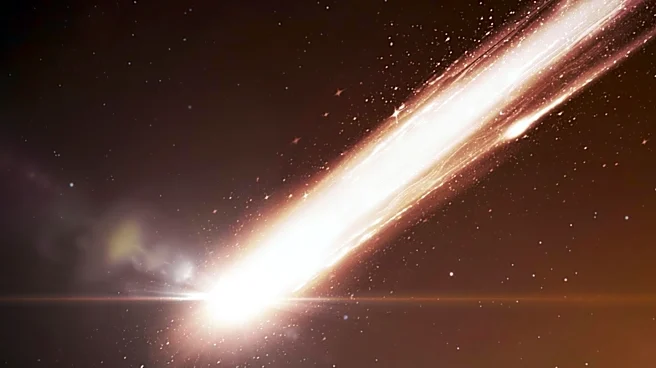
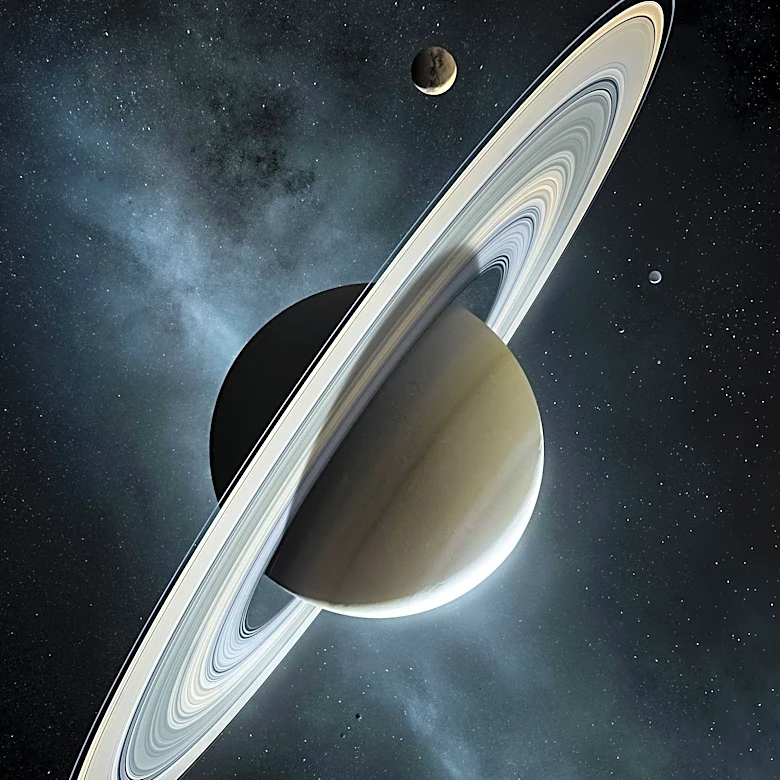
be visible in the eastern sky before sunrise, with the waning crescent Moon aiding in locating Mars and Saturn. Uranus, being fainter, will require binoculars or a telescope for viewing. Additionally, Comet 10P/Tempel 2 will be visible around the New Moon on July 14. This short-period comet, which returns every 5.5 years, can be seen near the constellation Capricornus. Observers are advised to find a dark location away from city lights for the best viewing experience. The same dark nights around the New Moon are also ideal for viewing the Milky Way, which appears as a cloudy band across the sky. Later in July, Saturn's rings, currently at a shallow angle, will be a rewarding target for telescope users.
Why It's Important?
These skywatching events provide an opportunity for both amateur and professional astronomers to engage with the night sky, fostering interest in astronomy and space science. The alignment of planets and the visibility of Comet 10P/Tempel 2 offer unique observational experiences that can enhance public understanding of celestial mechanics and the solar system. Such events can inspire educational activities and community gatherings, promoting science literacy and appreciation for space exploration. Additionally, observing Saturn's rings at a new angle can provide insights into the dynamics of planetary ring systems, contributing to ongoing research in planetary science.
What's Next?
As these events unfold, astronomy clubs and educational institutions may organize viewing parties and workshops to maximize public engagement. NASA and other space agencies might release additional resources and guides to assist amateur astronomers in their observations. The visibility of Comet 10P/Tempel 2 could lead to further studies on cometary behavior and composition, potentially involving citizen science projects. The changing view of Saturn's rings may prompt new research initiatives to understand the long-term evolution of ring systems. These activities could culminate in increased public interest and participation in future astronomical events.