



What's Happening?
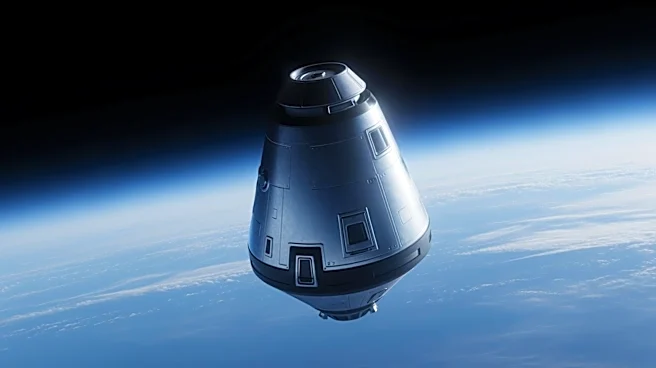
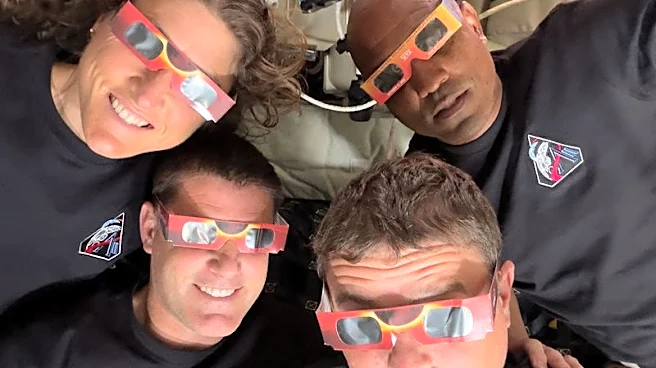
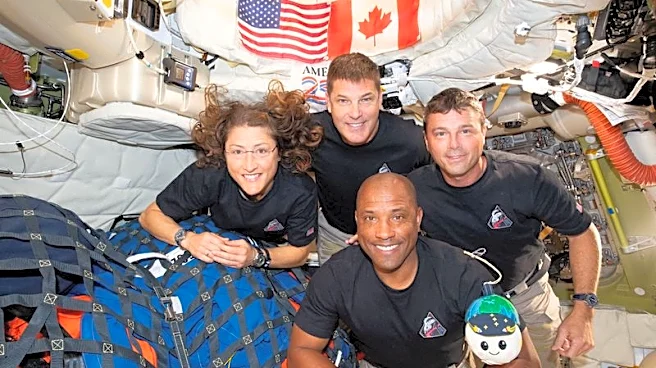
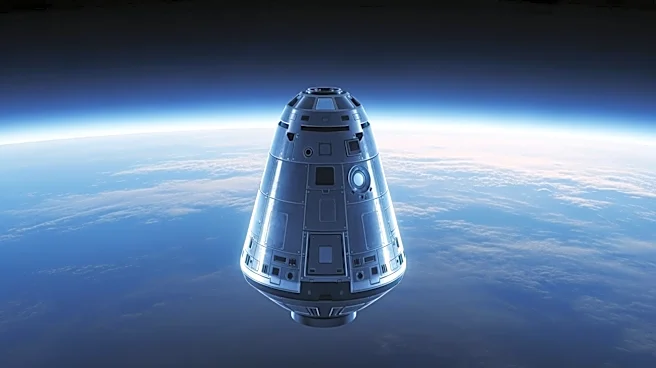
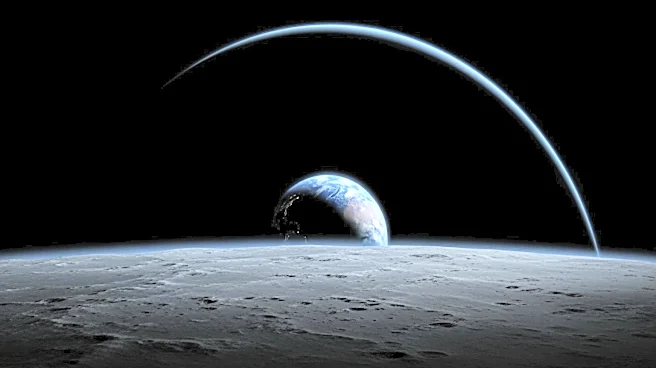
The Artemis II mission, featuring NASA astronauts Reid Wiseman, Victor Glover, Christina Koch, and Canadian astronaut Jeremy Hansen, is nearing its conclusion with preparations for a final burn and splashdown. The mission, which began with a successful
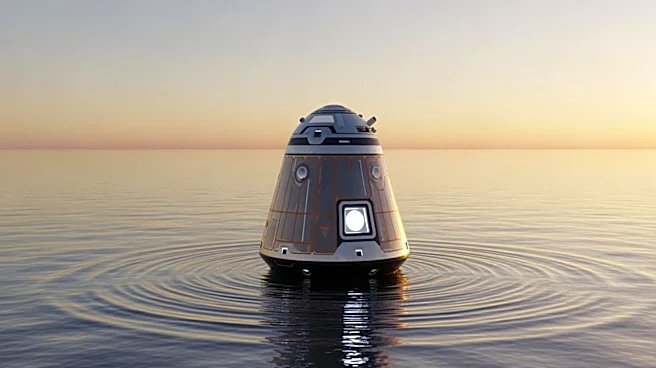
launch on April 1, marked the first human journey to the moon's vicinity since 1972. The crew conducted a historic lunar flyby, testing Orion's systems in deep space. As they prepare for re-entry, the crew will perform a third return trajectory correction burn to refine their path for atmospheric entry. Splashdown is scheduled off the coast of San Diego, where recovery teams will be ready to welcome the astronauts back to Earth.
Why It's Important?
The Artemis II mission is a critical step in NASA's efforts to return humans to the moon and beyond. By successfully completing a lunar flyby and testing Orion's systems, the mission demonstrates the spacecraft's readiness for future deep-space exploration. The data and experience gained will inform the planning and execution of subsequent Artemis missions, including the goal of a crewed moon landing in 2028. The mission also highlights international collaboration, with Canadian astronaut Jeremy Hansen participating, underscoring the global nature of space exploration. The successful completion of Artemis II will bolster confidence in NASA's ability to conduct complex space missions.
What's Next?
Following the splashdown, the Artemis II crew will undergo medical evaluations and debriefings. The mission's success will pave the way for Artemis III, which aims to land astronauts on the lunar surface. NASA will analyze the data collected during Artemis II to refine mission planning and spacecraft design. The agency is also working towards establishing a sustainable human presence on the moon, with plans for a lunar base by the end of the decade. The Artemis program's progress will be closely watched by international partners and the scientific community, as it represents a significant advancement in human space exploration.