



What's Happening?
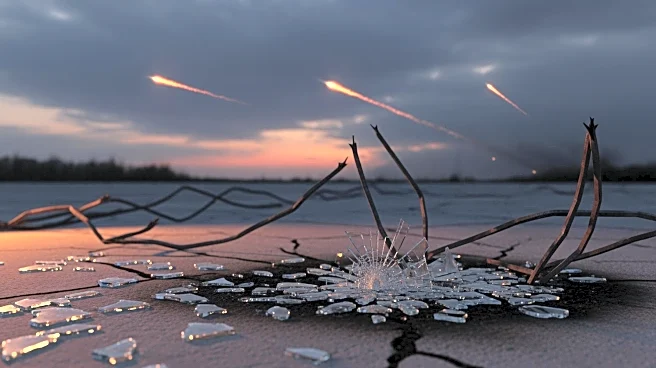
In a significant escalation, Russia launched a coordinated attack on Ukraine, deploying 480 drones and 29 missiles. The assault targeted energy facilities in Kyiv and other central regions, resulting in at least 10 civilian deaths in Kharkiv, including
two children. Ukrainian President Volodymyr Zelensky condemned the attack and called for an international response. The strikes also caused substantial damage to infrastructure, with debris reported in multiple districts of Kyiv and fires in the Odesa region. Ukrainian air defense systems managed to down 19 missiles and 453 drones, but the attack still inflicted severe damage, including to the rail infrastructure, forcing route changes.
Why It's Important?
This attack underscores the ongoing intensity of the conflict between Russia and Ukraine, highlighting the vulnerability of civilian areas and critical infrastructure. The use of a new Russian cruise missile, the Izdeliye-30, with advanced navigation systems, marks a technological escalation in the conflict. The international community's response, particularly from the European Union and the United States, could influence the future dynamics of support for Ukraine. The attack also diverts global attention from other geopolitical issues, such as the Middle East conflict, and emphasizes the need for sustained international engagement in Ukraine.
What's Next?
President Zelensky has called for continued international support and collaboration with the European Union to enhance Ukraine's defense capabilities. The attack may prompt further diplomatic efforts to secure additional military aid and protective measures for Ukraine. The international community's reaction, particularly from Western allies, will be crucial in determining the next steps in the conflict. Additionally, the ongoing war in the Middle East may affect the timing and focus of diplomatic negotiations between Russia and Ukraine.
Beyond the Headlines
The attack highlights the ethical and humanitarian challenges of modern warfare, where civilian areas are increasingly targeted. The use of advanced missile technology raises concerns about the proliferation of such weapons and their impact on global security. The conflict also poses long-term implications for regional stability in Eastern Europe and the broader geopolitical landscape, potentially influencing future international relations and defense policies.