






What's Happening?
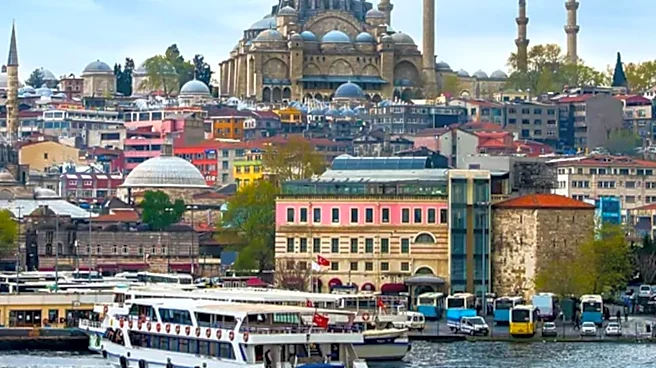
Istanbul, a city uniquely situated across both Europe and Asia, continues to be a significant global hub renowned for its historical depth and cultural vibrancy. The city is characterized by its magnificent architectural landmarks, including the Hagia
Sophia, the Blue Mosque, and the Topkapi Palace, which collectively narrate its extensive Byzantine and Ottoman past. Beyond these historical sites, Istanbul offers a dynamic contemporary scene with fashionable shopping districts, modern cafés, and art galleries, particularly in areas like Karaköy and Galata. The Bosphorus Strait, which divides the city, is a central feature, offering scenic views and serving as a vital waterway. Visitors can experience the city's unique blend of Eastern traditions and European charm through its diverse offerings, from exploring the Grand Bazaar to enjoying traditional Turkish cuisine.
Why It's Important?
Istanbul's unique geographical position as a bridge between two continents has historically made it a crossroads of civilizations, trade, and culture. This confluence has resulted in a rich tapestry of traditions, architectural styles, and culinary influences that are unparalleled globally. The city's historical significance, evident in its well-preserved landmarks, attracts millions of tourists annually, contributing substantially to Turkey's economy through tourism. Furthermore, Istanbul's role as a major port city on the Bosphorus Strait underscores its strategic importance in international shipping and trade, connecting the Black Sea to the Mediterranean. The blend of ancient heritage and modern urban development also positions Istanbul as a model for cultural preservation alongside economic growth, offering insights into managing historical sites within a rapidly evolving metropolitan environment.
What's Next?
Istanbul is expected to continue its development as a major tourist destination and economic center. Ongoing efforts in urban planning and infrastructure development aim to enhance visitor experience and accommodate its growing population. The city's cultural calendar, featuring events like the International Istanbul Book Fair and the Istanbul Marathon, will likely continue to draw international attention, promoting cultural exchange and tourism. Future initiatives may focus on sustainable tourism practices to preserve its historical sites and natural beauty, particularly along the Bosphorus. Additionally, as a key transit point, Istanbul's role in regional and international logistics is anticipated to expand, further solidifying its economic and strategic importance.
Beyond the Headlines
Beyond its immediate appeal as a tourist destination, Istanbul embodies a profound narrative of cultural synthesis and resilience. The city's ability to integrate diverse historical layers—from Roman and Byzantine to Ottoman and modern Turkish—into a cohesive identity offers a compelling case study in urban evolution. The Bosphorus, more than just a geographical divider, symbolizes the constant flow and interaction between East and West, influencing everything from architecture to daily life. This continuous dialogue between cultures fosters a unique social fabric, where ancient traditions coexist with contemporary trends. The city's vibrant street life, diverse culinary scene, and thriving arts community reflect a dynamic cultural landscape that is constantly reinventing itself while honoring its deep roots, making Istanbul a living museum and a forward-looking metropolis.