

What's Happening?
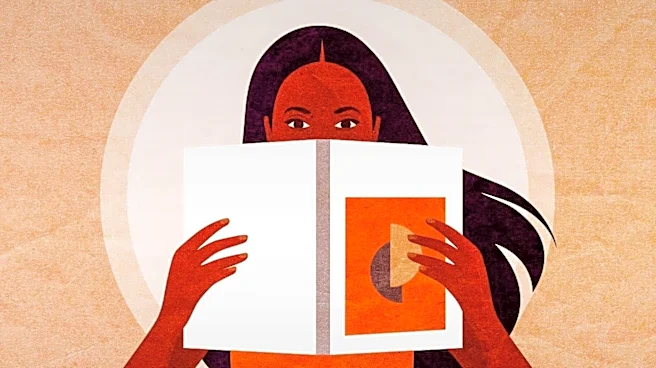
Sharon Linnéa has published a book, 'Less the Horror than the Grace' by Robert Owens Scott, which she describes as a means to honor his legacy and to address contemporary debates in the U.S. regarding women's voting rights. The book, a feminist take on the Medusa
myth, is set in a snake-handling church in Tennessee in 1920, coinciding with the final vote on women's suffrage in the Tennessee statehouse. Linnéa felt an urgency to release the book due to recent discussions by figures like Pete Hegseth and his pastor, who have argued that only male heads-of-household should vote. The narrative explores how institutions silence women through horror, myth, and history. Linnéa took on the responsibility of publishing the book after Bob's unexpected death, overseeing editing, design, and audio narration by Michael Beck.
Why It's Important?
This publication is significant as it directly engages with ongoing discussions about women's suffrage and gender equality in the U.S., using a historical fiction narrative to highlight contemporary relevance. The book's setting in 1920 Tennessee, a pivotal moment for women's voting rights, draws a clear parallel to current debates, underscoring the cyclical nature of such challenges. By honoring Bob's legacy and his feminist perspective, Linnéa contributes to the broader cultural conversation about the importance of women's voices in politics and society. The urgency Linnéa felt to publish the book reflects a perceived threat to established rights and a desire to counter narratives that seek to diminish women's political participation. This work serves as a cultural artifact that can stimulate dialogue and reflection on historical struggles and their modern-day echoes.
What's Next?
The book's release is likely to spark discussions among readers, literary critics, and potentially in broader social and political circles, especially given its timely themes. It may contribute to ongoing conversations about women's rights, historical interpretations of suffrage, and the role of literature in social commentary. Depending on its reception, the book could be used in educational settings or by advocacy groups to highlight issues of gender equality and political participation. The author, Sharon Linnéa, may engage in promotional activities, interviews, or speaking engagements that further elaborate on the book's themes and its connection to current events. The book's impact will largely depend on its ability to resonate with a diverse audience and provoke meaningful reflection on the enduring relevance of women's voting rights.
Beyond the Headlines
The deeper implications of this book extend to the ethical and cultural dimensions of historical memory and the ongoing struggle for equality. By revisiting the fight for women's suffrage through a horror narrative, the book challenges conventional understandings of historical events and societal power structures. It suggests that the 'horror' is not merely supernatural but rooted in human beliefs and institutional practices that seek to disempower women. This approach can foster a more nuanced understanding of how historical injustices continue to manifest in contemporary society. Furthermore, Linnéa's personal journey to publish the book after Bob's death highlights the profound impact of individual commitment to artistic and social causes, demonstrating how personal tragedy can fuel a dedication to preserving and amplifying important messages.