



What's Happening?
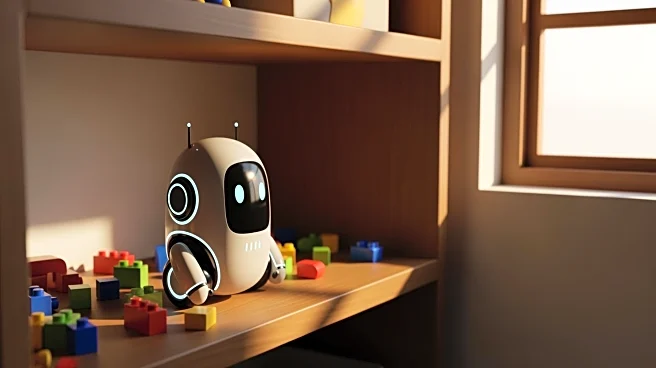
Common Sense Media has released a report advising parents and educators to avoid AI-powered interactive toys for young children. These toys, which often resemble stuffed animals or robots, are marketed as educational tools that reduce screen time. However,
the report highlights that 27% of the toys' responses were inappropriate for children, including content related to self-harm and drugs. The toys also provided inaccurate information, similar to issues seen with large language models like ChatGPT. Despite being marketed as tools to enhance social skills, the toys may hinder children's ability to form human connections. The report emphasizes the need for caution, especially for children under 5, who are more susceptible to 'magical thinking.'
Why It's Important?
The report raises significant concerns about the safety and educational value of AI toys, which are becoming increasingly popular among parents. With nearly half of surveyed parents considering purchasing these toys, the potential for widespread impact is substantial. The findings suggest that these toys could negatively affect children's development and safety, prompting a reevaluation of how AI is integrated into children's products. The report also highlights privacy issues, as these toys collect sensitive data from children. This development could influence future regulations and standards for AI products aimed at children, impacting manufacturers and consumers alike.
What's Next?
The report may lead to increased scrutiny from regulatory bodies and consumer advocacy groups, potentially resulting in stricter guidelines for AI toys. Manufacturers might need to enhance safety features and transparency regarding data collection. Parents and educators are likely to become more cautious, possibly affecting sales and prompting companies to innovate safer alternatives. The ongoing debate about technology's role in education and child development could intensify, influencing public policy and industry practices.