



What's Happening?
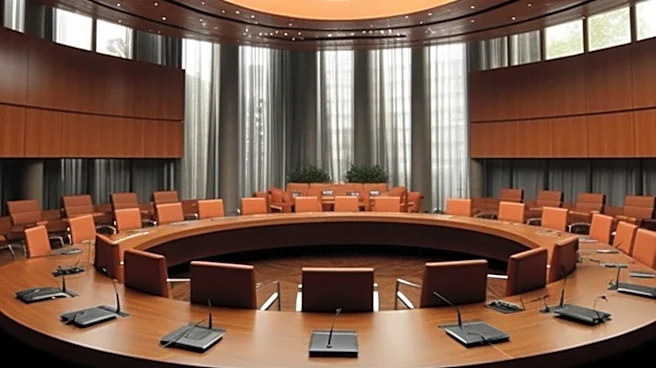
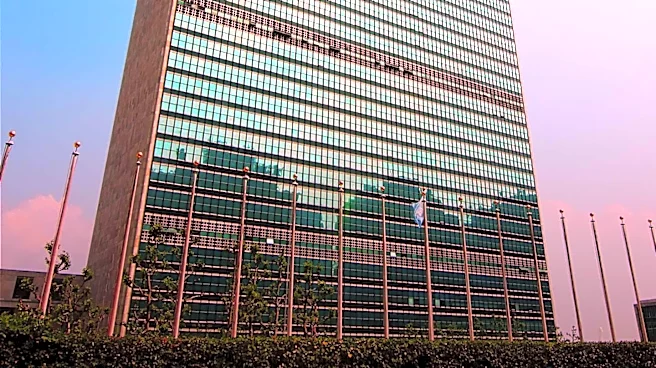
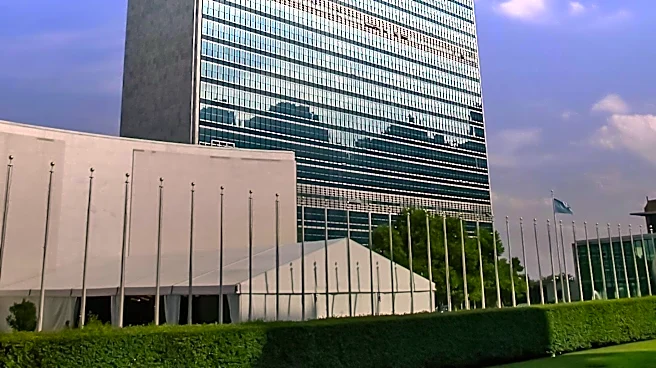
The United Nations Security Council's (UNSC) veto power, held by its five permanent members (P5), is being criticized for rendering international legal norms ineffective, particularly in situations of mass atrocities. This mechanism, outlined in Article
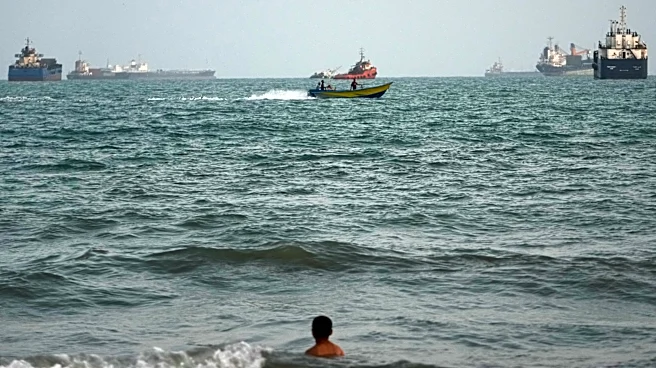
27(3) of the UN Charter, allows any single P5 state to block enforcement actions, sanctions, or military interventions under Chapter VII. Critics argue that this power creates a 'legalized anomic zone,' where formally valid humanitarian norms lose their substantive force, leaving populations vulnerable. The ongoing situation in Gaza is cited as a prime example, where mass civilian casualties, contested humanitarian access, and Security Council paralysis highlight the limitations of the current international legal architecture. Civilian relief initiatives, such as maritime flotillas, are attempting to fill this enforcement gap, often coming into direct conflict with state authority.
Why It's Important?
The exercise of the veto power by P5 members to shield themselves or allies from accountability during mass atrocities has profound implications for international law and human rights. It transforms formally valid legal instruments, like the UN Charter and Geneva Conventions, into documents with 'validity without meaning' (Geltung ohne Bedeutung), as they cannot be effectively enforced. This paralysis reduces affected populations to 'bare life' (zoē), stripped of political status and legal protection, and exposed directly to sovereign violence. The impunity enjoyed by perpetrators due to the veto shield undermines the rule of law and the principle of accountability for severe violations of international law, such as indiscriminate bombardment, forced starvation, or illegal blockades. This situation also raises questions about the moral complicity of the international community when collective responses to mass suffering are blocked.
What's Next?
To address the institutionalized exception created by the veto, several proposals are being considered. One approach is to frame atrocity vetoes as an 'abus de droit,' requiring P5 members to provide accountable justifications for blocking action. Initiatives like the France-Mexico proposal, which advocates for voluntarily suspending veto use in mass atrocity situations, aim to transform these pledges into binding interpretations of the UN Charter. Another avenue involves the UN General Assembly making fuller use of its authority under the 'Uniting for Peace' resolution (Resolution 377A) to recommend collective measures when the Security Council is deadlocked by a veto. Additionally, regional organizations could play a larger role in decentralized protection efforts, reducing reliance on a single Security Council pathway. These efforts seek to restore the protective function of international law and ensure that human dignity is effectively safeguarded.
Beyond the Headlines
The critique of the UN Security Council's veto power extends beyond its immediate impact on specific conflicts, touching upon fundamental ethical and philosophical questions about sovereignty, justice, and the value of human life. The concept of 'bare life' highlights how legal and political systems can dehumanize populations, making their suffering and deaths less 'grievable' in the global discourse. This symbolic order, as described by Judith Butler, determines whose lives are recognized as worthy of mourning and international solidarity. The ongoing debate challenges the traditional Westphalian principle of non-intervention, arguing that sovereignty should entail responsibility, especially in the face of mass atrocities. Overcoming the veto's paralyzing effect would not only strengthen international law but also represent a significant step towards a more equitable and humane global governance system, where legal protections are not merely theoretical but practically enforceable.