




What's Happening?
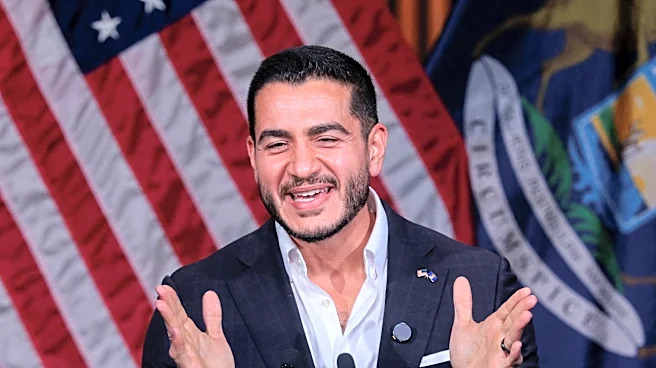
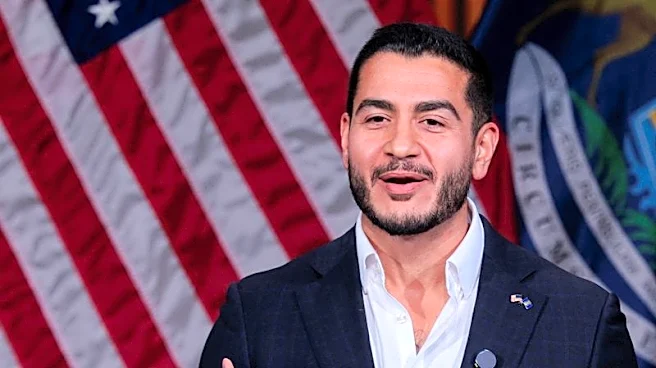
During election night coverage, Fox News anchor Bret Baier was caught on a hot mic making a comment that critics interpreted as a request to 'spin' a narrative. While national correspondent Garrett Tenney was reporting on Democrat Abdul El-Sayed's popularity
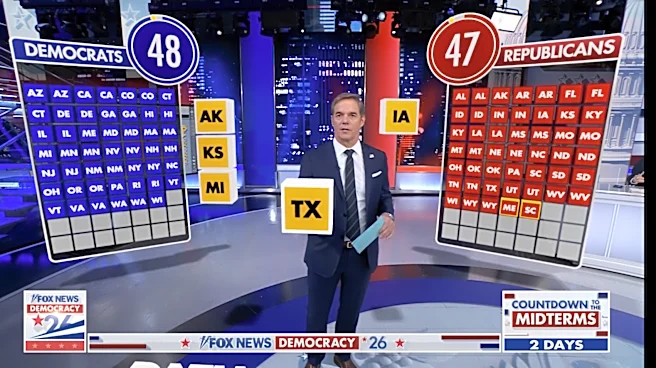
in Michigan, Baier was heard saying, 'OK, can we do a spin? On the races—'. He quickly realized he was on air. The comment went viral after Aaron Rupar posted a clip on X, leading to widespread criticism that Fox News was attempting to manipulate its coverage. Baier later clarified on X that his comment was directed at co-anchor Bill Hemmer and referred to 'a spin on the board' to review outstanding races, not to push a particular narrative. Fox News also provided a clarification to Rupar, explaining that 'spin' referred to using their large board of race calls.
Why It's Important?
This incident highlights the intense scrutiny faced by news organizations, particularly during high-stakes events like election nights. The immediate and widespread reaction on social media to Baier's 'hot mic' comment demonstrates the public's sensitivity to perceived media bias and the rapid dissemination of such perceptions. For Fox News, the event necessitated a swift clarification to mitigate potential damage to its credibility, especially among critics who frequently accuse the network of partisan reporting. The incident underscores the challenges news anchors face in live broadcasts and the ease with which a seemingly innocuous comment can be misinterpreted and amplified in the digital age, impacting public trust in media institutions.
What's Next?
While Baier and Fox News have issued clarifications, the incident may continue to fuel discussions among media critics and the public regarding journalistic integrity and perceived biases in news coverage. Social media platforms will likely remain a primary arena for these debates, with users continuing to analyze and interpret such events. News organizations, including Fox News, may face ongoing pressure to demonstrate transparency and impartiality, particularly as future election cycles approach. The event serves as a reminder for broadcasters to exercise extreme caution with their words, even when off-air, given the pervasive nature of recording and instant sharing in today's media landscape.
Beyond the Headlines
The 'hot mic' incident transcends a simple misunderstanding, touching upon deeper issues of media trust and the polarization of information in the U.S. The immediate assumption by many critics that Baier's comment implied narrative manipulation reflects a broader societal skepticism towards news outlets, particularly those perceived as having a political leaning. This event underscores how easily public perception can be swayed by isolated incidents, regardless of subsequent explanations. It also highlights the evolving role of social media as a real-time fact-checker and a platform for both legitimate critique and rapid misinterpretation, contributing to a complex and often contentious media environment where every word is scrutinized.