



What's Happening?
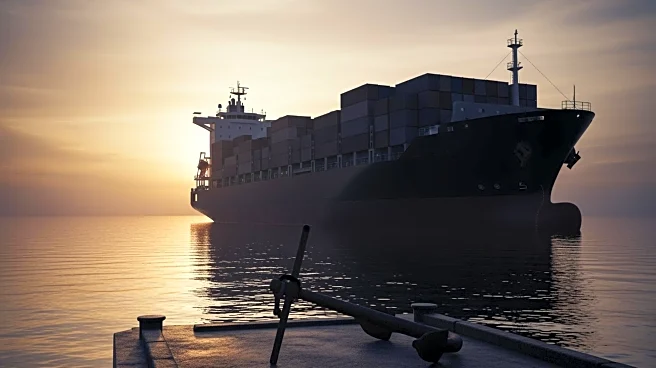
Turkish tanker owner Besiktas Shipping has announced its decision to halt all trade with Russia after one of its vessels, the Mersin, was reportedly damaged in a suspected Ukrainian attack. The incident occurred off the coast of Senegal, where the Mersin experienced
flooding in the engine room due to four 'external explosions.' The crew was safely rescued by the Senegalese Navy. The attack on the Mersin coincided with Ukrainian drone strikes on two other tankers, Kairos and Virat, in the Black Sea, both linked to the Russian energy trade. Although Ukraine claimed responsibility for the strikes on Kairos and Virat, it did not claim the attack on Mersin. Besiktas Shipping, which has been in the tanker business for six decades, stated that the increasing regional security risks have made it untenable to continue operations involving Russian interests.
Why It's Important?
The decision by Besiktas Shipping to cease operations with Russia underscores the heightened risks associated with maritime trade in regions affected by the ongoing conflict between Ukraine and Russia. This move reflects broader concerns within the shipping industry about the safety of vessels operating in areas where military actions are taking place. The cessation of trade by a significant player like Besiktas could influence other shipping companies to reassess their operations in the region, potentially impacting the flow of energy resources and trade routes. This development also highlights the broader geopolitical tensions and the economic ramifications of the conflict, affecting stakeholders involved in the energy and shipping sectors.
What's Next?
Besiktas Shipping's decision may prompt other shipping companies to evaluate their exposure to similar risks and consider altering their trade routes or ceasing operations in conflict-prone areas. The ongoing conflict and associated risks could lead to increased insurance premiums for vessels operating in these regions, further affecting the cost of maritime trade. Additionally, international bodies and governments may need to address the security concerns of commercial shipping in conflict zones to ensure the safety of maritime operations and the stability of global trade.