



What's Happening?
A federal judge has temporarily reinstated a pause on a Trump administration regulation that sought to restrict mail voting. U.S. District Judge Indira Talwani issued a two-week temporary restraining order, asserting that the U.S. Postal Service (USPS)
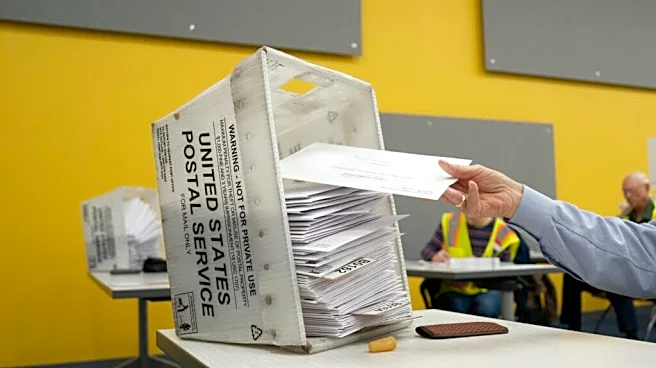
rule violates states' authority to manage elections. This decision comes after Judge Talwani had previously lifted a similar pause, following a U.S. Supreme Court procedural ruling. The judge stated that the government failed to provide evidence of widespread fraudulent mail voting, which the rule was purportedly designed to address. Conversely, voting rights groups and Democratic states that challenged the rule demonstrated that its implementation could disenfranchise voters in the upcoming November 3 midterm elections. The rule introduces new requirements for mail ballot envelopes, which states argue would be challenging to implement before the elections. It also mandates states to provide lists of voting-age citizens to the federal government for cross-referencing with federal citizenship data, and prohibits the USPS from delivering or collecting ballots from individuals not confirmed as eligible voters through this process.
Why It's Important?
This judicial intervention is significant as it directly impacts the administration of elections and the accessibility of mail-in voting, particularly in the context of the upcoming midterm elections. The ruling underscores the ongoing legal and political battle over election integrity and voting rights in the United States. The Trump administration has consistently claimed, without providing evidence, that mail voting is prone to fraud, framing the rule as a measure to enhance election security. However, opponents argue that such restrictions could suppress voter turnout and disproportionately affect certain demographics. The judge's decision to prioritize the potential for voter disenfranchisement over the administration's unsubstantiated claims of fraud highlights a fundamental tension between federal oversight and states' rights in election management. The outcome of this legal challenge could set precedents for how future elections are conducted and how federal agencies interact with state election processes.
What's Next?
The federal government is expected to appeal Judge Talwani's latest order. This will likely lead to further legal proceedings, potentially reaching higher courts, as the administration seeks to implement its mail voting restrictions. States and voting rights groups will continue to monitor and challenge any attempts to enforce the rule, emphasizing the potential for voter disenfranchisement. The two-week temporary restraining order provides a brief reprieve, but the long-term fate of the regulation remains uncertain. The ongoing legal battle will likely continue to unfold in the weeks leading up to the November 3 midterm elections, with potential for further judicial rulings and appeals. Stakeholders, including political leaders, election officials, and civil society groups, will closely watch these developments, as the final decision will have direct implications for how citizens cast their ballots.
Beyond the Headlines
Beyond the immediate legal implications, this case touches upon deeper constitutional questions regarding the balance of power between federal and state governments in election administration. The judge's skepticism about the government's claims of fraud, coupled with the emphasis on potential voter disenfranchisement, highlights the ethical and democratic considerations at play. The debate over mail-in voting also reflects broader societal divisions concerning trust in electoral processes and the role of government in regulating access to the ballot box. The long-term shifts triggered by such developments could include increased scrutiny of election laws, potential reforms to voting procedures, and a continued focus on ensuring both election security and voter accessibility. The outcome of this and similar cases could influence public perception of election fairness and the integrity of democratic institutions.