
What's Happening?
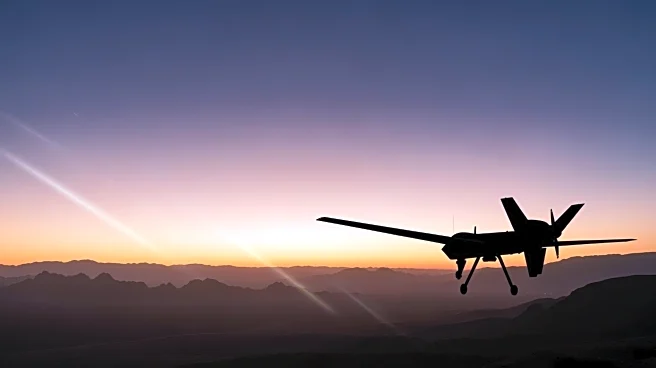
The United States has recently conducted a series of airstrikes in Somalia, targeting groups affiliated with the Islamic State (ISIS) and al-Shabab. These operations are part of a broader strategy by the U.S.
Africa Command (AFRICOM) to mitigate the threat of terrorism both in Africa and potentially on U.S. soil. According to U.S. Army Lt. Gen. John Brennan, these terrorist groups pose a significant threat not only to the region but also to the United States and Europe. The airstrikes are intended to disrupt the operations of these groups, which have been known to plot attacks against Western targets. In 2025, AFRICOM executed 124 airstrikes in collaboration with Somali forces, and the pace of operations has increased in early 2026.
Why It's Important?
The airstrikes in Somalia underscore the ongoing global fight against terrorism and the strategic importance of Africa in this context. By targeting ISIS and al-Shabab, the U.S. aims to prevent these groups from gaining a foothold that could enable them to launch attacks beyond Africa. This proactive approach is seen as a means to protect U.S. national security interests by addressing threats at their source. The operations also highlight the U.S.'s commitment to supporting regional stability in Africa, which is crucial for preventing the spread of extremist ideologies and maintaining international security.
What's Next?
The continuation of airstrikes and military operations in Somalia is likely as the U.S. seeks to maintain pressure on ISIS and al-Shabab. The U.S. military, in collaboration with Somali and international partners, will likely continue to focus on intelligence sharing and strategic strikes to dismantle terrorist networks. The effectiveness of these operations will be closely monitored, and adjustments may be made to strategies based on the evolving threat landscape. Additionally, there may be diplomatic efforts to strengthen partnerships with African nations to enhance regional security and counter-terrorism capabilities.