
What's Happening?
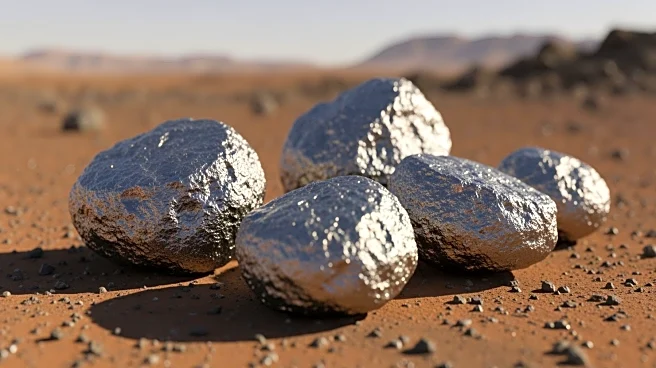
NASA's Perseverance rover has discovered several meteorites on Mars, including a notable 80-centimeter iron-nickel meteorite named 'Phippsaksla'. This discovery, along with previous finds by the Curiosity rover, highlights the presence of metal-rich meteorites on the Martian
surface. These meteorites, analyzed using advanced instruments like SuperCam, provide valuable data on the chemical composition of Mars and its geological history. The findings suggest that these meteorites may have originated from the cores of large asteroids, offering clues about the early solar system. The ongoing exploration by rovers like Perseverance and Curiosity continues to expand our understanding of Mars and its potential for past life.
Why It's Important?
The discovery of meteorites on Mars is significant for several reasons. It provides direct evidence of the planet's exposure to space debris, which can offer insights into the history of the solar system. The composition of these meteorites, particularly their metal content, helps scientists understand the processes that shaped Mars and other planetary bodies. Additionally, studying these meteorites can reveal information about Mars' surface conditions and atmospheric changes over time. This research is crucial for future missions, as it informs strategies for exploring Mars and assessing its habitability.
What's Next?
As Perseverance continues its mission, it is expected to uncover more meteorites and geological features that will further illuminate Mars' history. Future missions may focus on retrieving samples from these meteorites for detailed analysis on Earth. The data collected will aid in planning human exploration of Mars, as understanding the planet's surface and potential resources is essential for long-term missions. Collaboration between international space agencies may also increase, leveraging shared knowledge to advance planetary science.