






What's Happening?
The U.S. Army’s Southern European Task Force, Africa (SETAF-AF) has initiated a partnership with the Global Tactical Edge Acquisition Directorate (G-TEAD) to conduct testing of drone-defense systems in Africa. This collaboration, announced on October
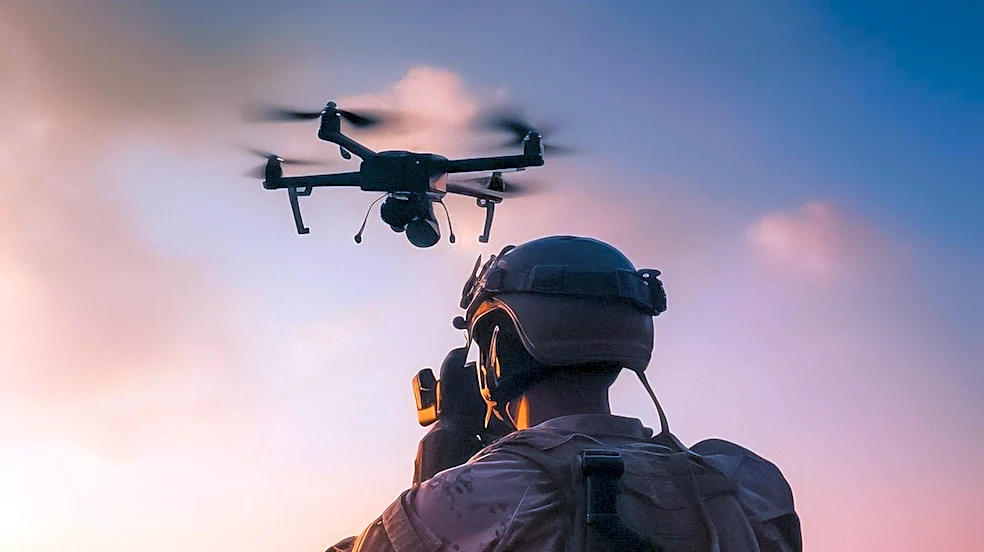
16, aims to expedite the deployment of selected technologies to soldiers within 180 days. The first accelerated capability event is scheduled for spring 2027 in Tan-Tan, Morocco. This event will focus on evaluating counter-uncrewed aircraft systems and force-protection technologies designed for early-entry command posts and operating locations susceptible to small drone threats. A soldier-led demonstration is planned for February and March 2027, followed by an operational assessment during African Lion 2027 in April and May. African Lion is recognized as the largest joint U.S. Africa Command exercise on the continent. G-TEAD will assess up to 15 potential solutions, with PAE Fires serving as the transition partner. The process involves a three-stage approach: submission and preparation, soldier-led demonstrations, and a subsequent operational evaluation.
Why It's Important?
This partnership is significant for enhancing the U.S. Army's capabilities in countering drone threats, particularly in diverse and challenging environments. Africa's operating conditions, characterized by open spectrum, uncongested airspace, and varied terrain, offer a unique testing ground that U.S. and European training ranges may not easily replicate. This allows for more realistic and comprehensive evaluation of defense systems. The accelerated acquisition route, aiming to move technologies from identification to field use rapidly, addresses critical operational requirements and capability gaps identified by commanders. By embedding G-TEAD personnel within U.S. Army service component commands like SETAF-AF, the initiative streamlines the connection between operational needs and acquisition resources. This coordinated approach across multiple commands, as highlighted by G-TEAD director U.S. Army Colonel Christopher Hill, enables the consolidation of funding and facilitates the wider adoption of validated solutions across the U.S. Army, ultimately strengthening military readiness against evolving drone warfare tactics.
What's Next?
The immediate next steps involve the preparation for the first accelerated capability event in spring 2027 in Tan-Tan, Morocco. This will include the selection of up to 15 potential counter-drone solutions for assessment. Following this, a soldier-led demonstration is scheduled for February and March 2027, which will provide initial feedback on the effectiveness and usability of these technologies. The operational assessment will then take place during African Lion 2027 in April and May, offering a comprehensive evaluation within a large-scale military exercise. The outcome of these assessments will determine which technologies are deemed suitable for rapid deployment to soldiers. G-TEAD's model of coordinating modernization activities and combining funding across various commands suggests that successful solutions from this event could be integrated into broader U.S. Army operations, potentially leading to enhanced counter-drone capabilities across different theaters.
Beyond the Headlines
This initiative reflects a broader strategic shift in military procurement and defense against emerging threats. The emphasis on rapid acquisition and testing in real-world, diverse environments underscores the urgency of adapting to the proliferation of drone technology. The partnership also highlights the increasing importance of international collaborations in defense, as the U.S. Army leverages unique geographical and operational conditions in Africa for advanced testing. Furthermore, the focus on 'last-mile' connectivity and protection for early-entry command posts indicates a recognition of the vulnerability of forward operating bases to small drone attacks. This could lead to significant changes in how military installations are secured and how personnel are equipped in contested environments. The success of this model could also influence future defense acquisition strategies, promoting more agile and responsive approaches to technological integration in military operations globally.