







What's Happening?
Cranston's Garden City neighborhood is on the verge of being listed on the National Register of Historic Places, a culmination of over seven years of advocacy by the Garden City Alliance. A significant step in this process was a neighborhood meeting held
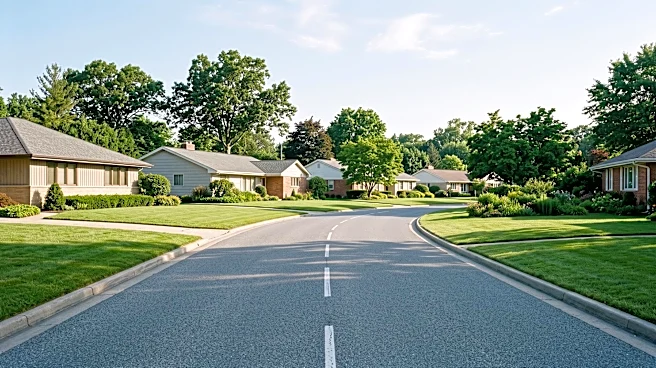
on November 12th at the Garden City School. Garden City, which began construction in 1946, is recognized as one of the first planned communities in post-World War II America. It was designed as a 'City within a City,' featuring a 'Main Street' with various shops, a church, and a school, alongside homes intended as starter residences. The community was developed with funding from the Federal Housing Administration (FHA) and is characterized by its winding streets, neatly set-back homes, and generous backyards. The Garden City Center, however, will not be included in the nomination due to extensive changes since its inception, rendering it no longer historical in nature.
Why It's Important?
The inclusion of Cranston's Garden City neighborhood on the National Register of Historic Places holds significant cultural and historical importance. It will mark the first Mid-Century listing in the National Register for the State of Rhode Island, recognizing a pivotal era of American urban planning and social development. This designation acknowledges Garden City's unique role as a model for post-WWII planned communities, designed to welcome returning servicemen and foster a new start for families. For residents, it can instill a sense of pride and potentially offer certain protections or incentives for historic preservation. For the broader community, it highlights the architectural and social evolution of American suburbs. The project is being overseen by the City of Cranston, with historical surveys conducted by The Public Archaeology Laboratory, Inc. (PAL) in 2022 and 2023.
What's Next?
The neighborhood meeting on November 12th was one of the final steps before the official listing on the National Register of Historic Places. The City of Cranston will continue to oversee the project, and the process may involve further adjustments to the boundaries of the historic district, potentially adding adjacent plats. The designation will bring recognition to Garden City's historical significance and could influence future development and preservation efforts within the neighborhood. The project also sets a precedent for recognizing mid-century developments in Rhode Island, potentially paving the way for other similar communities to seek historic designation.
Beyond the Headlines
The impending historic designation of Garden City transcends mere recognition; it underscores the evolving understanding of what constitutes historical significance in American urban landscapes. Traditionally, historic preservation often focused on older, pre-20th-century structures. However, the inclusion of a post-WWII planned community like Garden City reflects a growing appreciation for mid-century modern architecture and the social engineering aspects of suburban development. This shift acknowledges the profound impact of the post-war era on American life, including the rise of the nuclear family, car culture, and the planned community ideal. It also highlights the importance of local advocacy groups, like the Garden City Alliance, in driving preservation efforts and ensuring that the stories embedded in these landscapes are recognized and protected for future generations.