

What's Happening?
The Federal Aviation Administration (FAA) has proposed new regulations to replace the 1973 ban on supersonic flights over land in the United States. The original ban was implemented due to the disruptive sonic booms caused by aircraft exceeding the speed
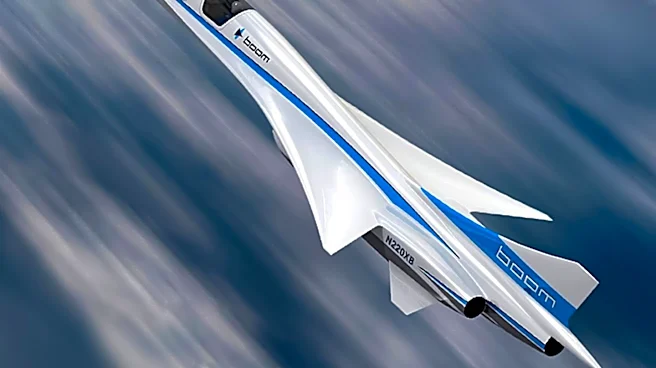
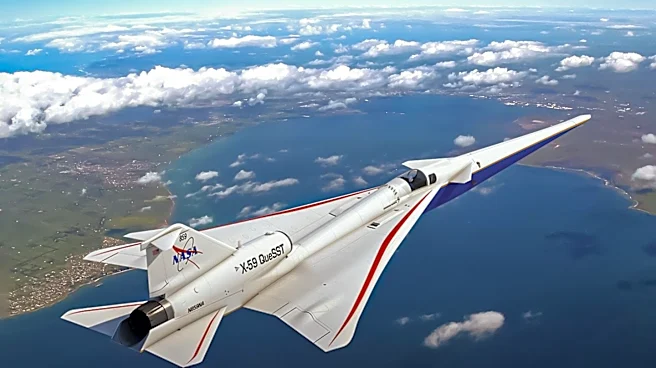
of sound. The new rules focus on noise levels rather than speed, allowing for the possibility of supersonic travel if noise can be minimized. This shift comes as advancements in technology, such as Boom Supersonic's 'boomless cruise' and NASA's X-59 low-boom aircraft, show promise in reducing the impact of sonic booms. The FAA's proposal aims to adopt these noise-based regulations by mid-2027, potentially revitalizing the commercial supersonic flight industry.
Why It's Important?
The FAA's move to replace the supersonic flight ban with noise-based regulations could significantly impact the aviation industry by reopening the market for supersonic travel. This change could lead to faster travel times and new economic opportunities for airlines and manufacturers. However, it also raises concerns about environmental impacts and noise pollution. The success of these regulations will depend on the ability of new technologies to effectively mitigate sonic booms, ensuring that supersonic flights do not disturb communities. If successful, this could mark a major shift in air travel, offering faster international routes and potentially reshaping global connectivity.
What's Next?
The FAA plans to finalize and implement the new noise-based regulations by mid-2027. In the meantime, companies like Boom Supersonic and NASA will continue to develop and test technologies to reduce sonic booms. Public perception and acceptance of these technologies will be crucial, as will the ability of manufacturers to meet the new noise standards. The FAA will likely conduct further studies and public consultations to ensure the regulations balance technological advancements with community concerns. The outcome of these efforts could determine the future of commercial supersonic travel in the U.S.