


What's Happening?
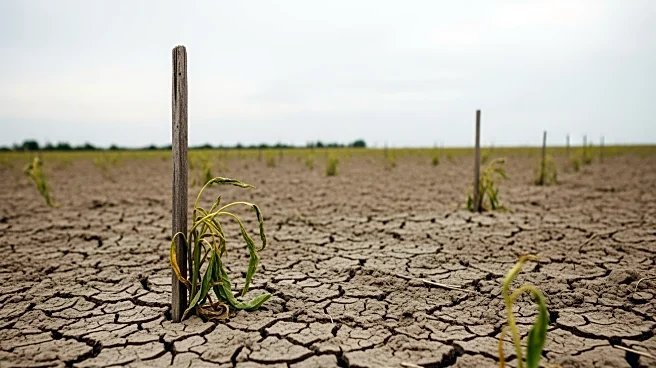
North Carolina is experiencing severe drought conditions affecting over 9.5 million residents, prompting the North Carolina Forest Service to issue a statewide burn ban. The drought, which is classified as extreme in some areas, poses a significant risk
of wildfires, especially as the state approaches its peak planting season for crops like corn, soybeans, and cotton. Agriculture Commissioner Steve Troxler emphasized the importance of the burn ban to prevent new fire starts, given the dry conditions and high fire danger. The drought impacts the state's agriculture sector, a major economic driver, with potential implications for crop yields and farm operations.
Why It's Important?
The drought and subsequent burn ban underscore the vulnerability of North Carolina's agriculture industry to climate variability. As the state's largest economic sector, agriculture's success is crucial for local economies and food supply chains. The drought could lead to reduced crop yields, affecting farmers' incomes and potentially increasing food prices. Additionally, the situation highlights the need for adaptive strategies in agriculture to cope with changing climate patterns, which could include water management practices and drought-resistant crop varieties.
What's Next?
Farmers and agricultural stakeholders will need to monitor weather conditions closely and adjust planting schedules and practices to mitigate the impact of the drought. State agencies may provide support and resources to help farmers navigate these challenges. The burn ban will remain in effect until conditions improve, and ongoing assessments will determine when it can be lifted. The situation may also prompt discussions on long-term strategies for managing water resources and enhancing agricultural resilience in the face of climate change.