





What's Happening?
A 1931 Exhibition of Indian Tribal Art, researched by a NASI Undergrad intern at the American Philosophical Society (APS), played a pivotal role in changing the perception and language surrounding Indigenous art. Previously often characterized as 'primitive,'
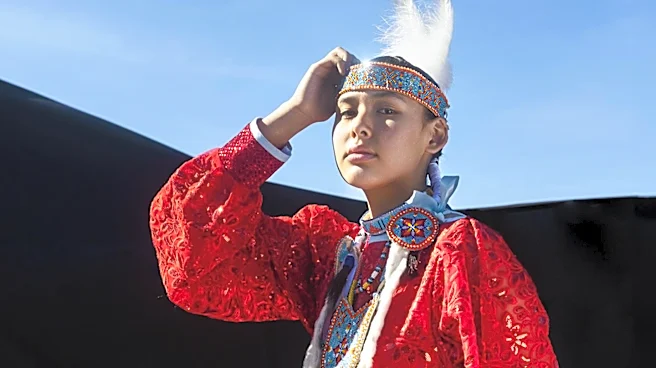
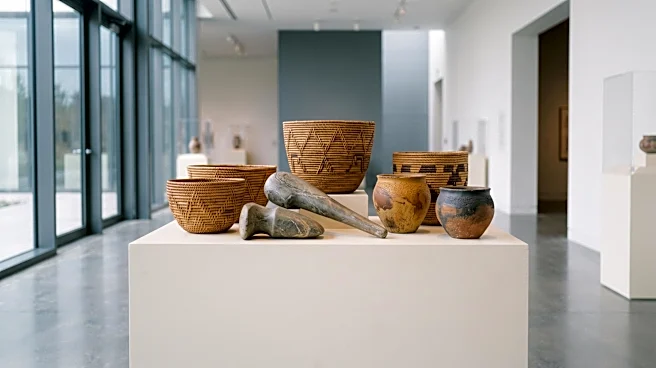
this exhibition aimed to secure due recognition for Indian artists and craftsmen. The exhibition traveled to 14 U.S. cities between 1931 and 1933, showcasing over 600 pieces of Indigenous art, ranging from baskets to watercolors. Influential figures such as Charles G. Dawes, Vice President under Calvin Coolidge, the Rockefeller family, and Mrs. Herbert Hoover were associated with the show. The exhibition's organizers presented it as the first display of Indigenous art for 'purely aesthetic' value, a perspective that an Indigenous artist and researcher finds intriguing yet inauthentic, noting that Indigenous art inherently carries meaning and purpose beyond mere aesthetics. The research highlights how Indigenous art often serves both material and utilitarian functions, with intricate designs carrying cultural significance.
Why It's Important?
This historical re-evaluation of Indigenous art is significant for several reasons. It challenges long-held biases and colonial perspectives that often relegated non-Western art forms to a 'primitive' status, denying them the same artistic merit as Western 'fine' art. By advocating for the aesthetic value and cultural depth of Indigenous creations, the exhibition helped pave the way for greater appreciation and understanding of these art forms within the broader art world. For Indigenous communities, this recognition is crucial for cultural preservation, economic empowerment of artists, and correcting historical misrepresentations. The shift in language from 'primitive' to 'profound' underscores a broader societal movement towards acknowledging the rich artistic heritage and sophisticated cultural expressions of Indigenous peoples, influencing how museums, galleries, and educational institutions approach and present such works today.
What's Next?
The ongoing research into this exhibition, including the creation of a website to provide an accessible platform for learning, suggests a continued effort to educate the public and academic communities about the historical significance of Indigenous art. This initiative aims to ensure that the legacy of the 1931 exhibition, as a landmark event in the recognition of Native American art, is not overlooked. Future efforts may involve further archival exploration, collaborations with Indigenous cultural institutions, and educational programs to integrate these historical insights into contemporary art discourse. The goal is to foster a deeper appreciation for Indigenous art's aesthetic and cultural value, ensuring that Indigenous artists receive the recognition they deserve and that their work is understood within its proper cultural context.
Beyond the Headlines
The re-contextualization of Indigenous art from 'primitive' to 'profound' touches upon deeper ethical and cultural implications. It highlights the power of language in shaping perceptions and the historical impact of colonial narratives on artistic valuation. The notion that Indigenous art is rarely 'purely aesthetic' but deeply embedded with meaning and purpose challenges Western art historical frameworks that often separate art from its functional or spiritual context. This perspective encourages a more holistic understanding of art, recognizing its role in community life, storytelling, and cultural identity. The exhibition's influence serves as a reminder that the value of art is not universal but culturally constructed, and that recognizing diverse artistic traditions is essential for a truly inclusive global art history.