





What's Happening?
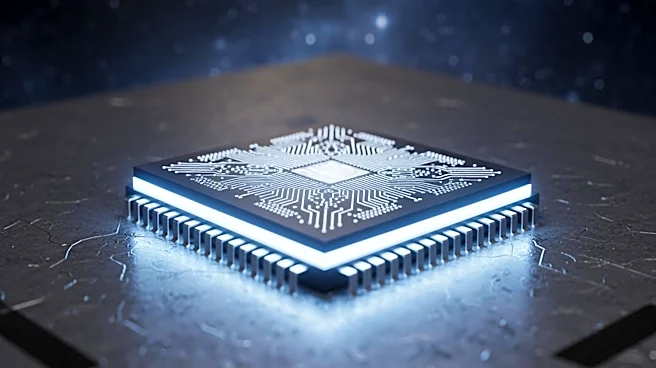
NASA's Artemis II mission, which includes astronauts Reid Wiseman, Christina Koch, Victor Glover, and Canadian astronaut Jeremy Hansen, is utilizing Czech-made radiation chips to measure cosmic radiation effects. These chips, developed by ADVACAM, are
part of the Hybrid Electronic Radiation Assessor (HERA) system, designed to provide real-time warnings of solar flares. The mission marks the first time in over 50 years that astronauts have ventured into cislunar space, and the data collected will help verify the effectiveness of radiation shielding on the Orion spacecraft. The technology, which has roots in the Large Hadron Collider and has been tested on the ISS, aims to improve safety for future spaceflights by minimizing radiation exposure risks.
Why It's Important?
The use of radiation chips on Artemis II is crucial for enhancing the safety of astronauts and spacecraft in space. By providing real-time data on radiation levels, the technology helps in making informed decisions to protect astronauts from harmful exposure. This advancement is significant for the future of space exploration, as it addresses one of the major challenges of long-duration missions beyond Earth's orbit. The data collected will not only benefit space missions but also have applications in high-altitude flights and the protection of space-based communication and navigation systems. The initiative underscores the importance of international collaboration in advancing space technology.
What's Next?
The success of the radiation chips on Artemis II could lead to their integration into future space missions, enhancing safety protocols for astronauts. ADVACAM plans to expand the use of these sensors to forecast radiation conditions in low Earth orbit, which could benefit various industries reliant on space assets. The data collected may also influence the design of future spacecraft, ensuring better protection against radiation. As NASA continues its lunar exploration efforts, the insights gained from Artemis II will be instrumental in planning for sustainable human presence on the Moon and beyond.