






What's Happening?
The New Jersey Department of Health (NJDOH) has issued an alert regarding potential measles exposures in several locations across New Jersey. This alert follows the identification of a measles case in a non-New Jersey resident who visited multiple sites
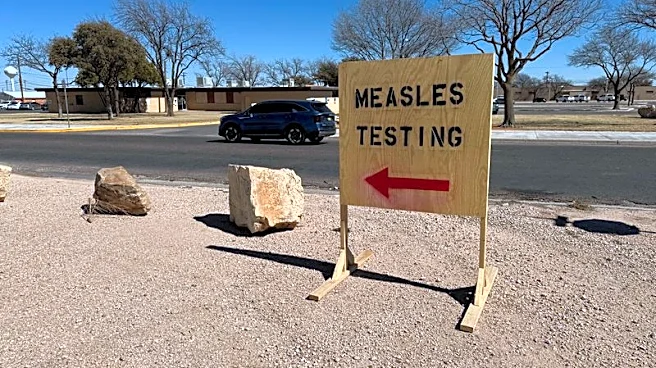
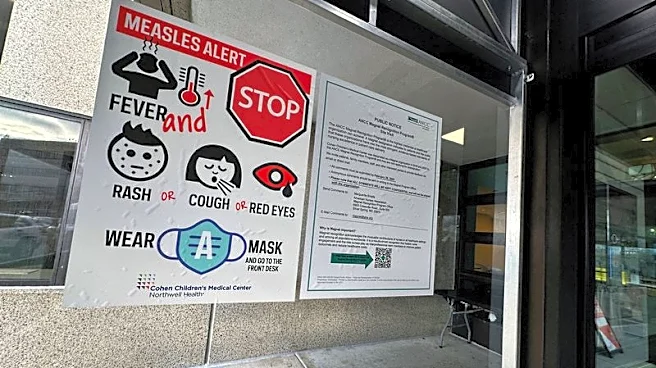
while infectious. The NJDOH is urging individuals, particularly parents, guardians, healthcare providers, and caregivers, to be vigilant about measles symptoms and to ensure their measles, mumps, and rubella (MMR) vaccinations are up to date. Measles is a highly contagious virus that spreads easily through the air and can remain airborne for up to two hours after an infected person leaves an area. Symptoms include high fever, cough, runny nose, watery red eyes, and a rash that typically appears three to five days after initial symptoms. The rash usually starts on the face and spreads downwards. The NJDOH has specified several locations and timeframes where exposure may have occurred, including LegionsCon at Hanover Marriott, Sonesta Simply Suites Parsippany Morris Plains, Walgreens Store #10438 in Morristown, and Atlantic Health Morristown Medical Center – Emergency Department. Individuals who suspect exposure or illness are advised to contact their local health department or healthcare provider before visiting any medical facility to prevent further spread.
Why It's Important?
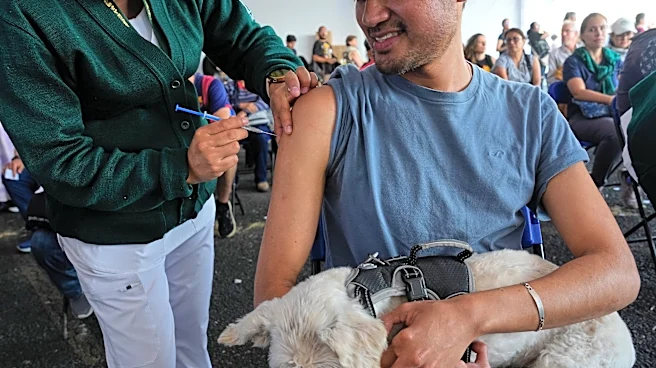
This alert from the NJDOH underscores the ongoing public health challenge posed by vaccine-preventable diseases like measles, even in regions with generally high vaccination rates. The potential exposure highlights the vulnerability of communities when herd immunity drops below the critical 95% threshold, allowing the virus to spread rapidly. The incident also emphasizes the interconnectedness of public health, as an infectious individual from outside the state can quickly create exposure risks within New Jersey. For healthcare systems, this event necessitates heightened vigilance, robust contact tracing efforts, and clear communication strategies to manage potential outbreaks and maintain public trust. The call for residents to ensure up-to-date MMR vaccinations is crucial, as two doses are 97% effective in preventing infection and outbreaks. The potential for serious complications from measles, such as pneumonia and encephalitis, and risks to pregnant individuals, makes rapid response and prevention paramount for public safety and healthcare resource management.
What's Next?
The NJDOH is actively collaborating with local health officials on contact tracing and notifying individuals who may have been exposed. Information regarding additional exposures will be posted on the Department's website. Potentially exposed individuals could develop symptoms as late as December 4, 2026. Healthcare providers are requested to assess immunization statuses for all patients and staff and to make appropriate arrangements when referring suspected measles cases to medical facilities. The NJDOH also stresses the importance of being fully vaccinated at least two weeks before international travel or travel to areas with active measles outbreaks, especially for infants aged 6 to 11 months. While New Jersey is not currently experiencing a measles outbreak (defined as three or more related cases), the national context shows a significant number of confirmed measles cases and outbreaks across the United States, indicating a broader public health concern that requires ongoing monitoring and proactive vaccination efforts.