






What's Happening?
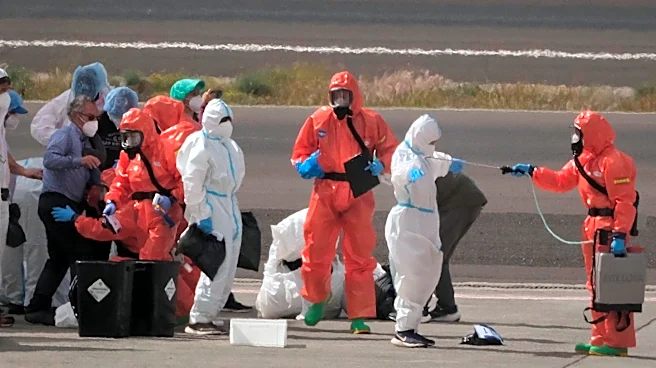
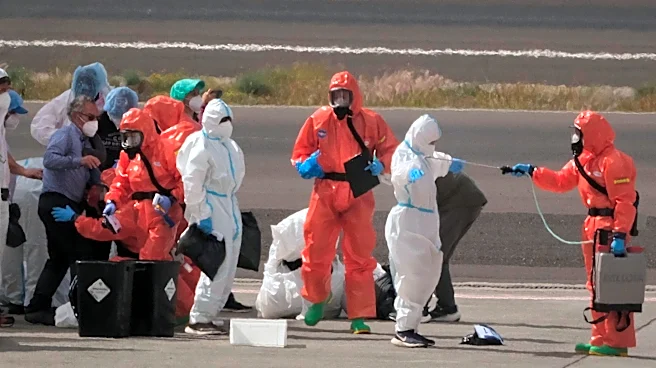
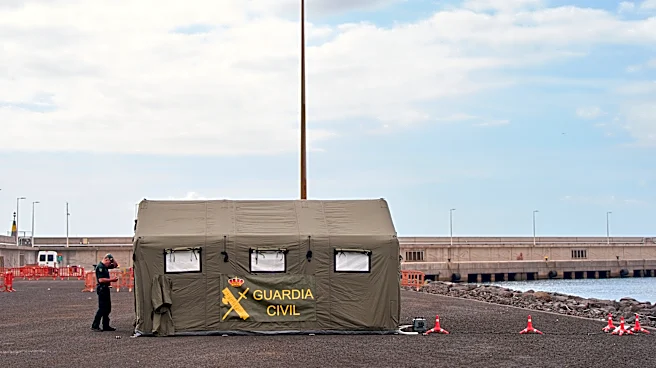
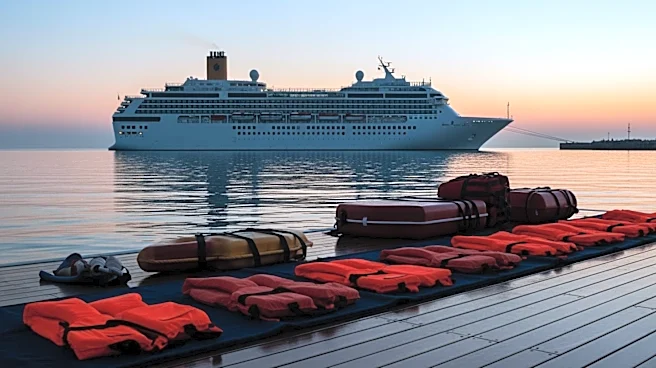
The final passengers from the MV Hondius, a cruise ship affected by a hantavirus outbreak, have been evacuated and are under quarantine. Among the evacuees, one American has tested positive for the virus. The ship, which left Argentina on April 1, has seen
three deaths due to the virus. The World Health Organization (WHO) and U.S. health officials have stated that the risk to the public remains low, as the virus requires prolonged close contact to spread. The U.S. Department of Health and Human Services is monitoring 18 American passengers, with some being treated at facilities in Nebraska and Atlanta.
Why It's Important?
The situation highlights the challenges of managing infectious disease outbreaks on international vessels and the importance of rapid response and containment measures. The U.S. health system's ability to handle such cases without escalating into a larger public health crisis is crucial. This incident also serves as a reminder of the potential for infectious diseases to spread globally, necessitating coordinated international health efforts. The response to this outbreak could influence future policies on handling similar situations, particularly in terms of quarantine and repatriation procedures.
What's Next?
Health officials will continue to monitor the quarantined individuals for any further spread of the virus. The MV Hondius will undergo disinfection before resuming operations. The U.S. may review and update its protocols for handling infectious disease outbreaks on international vessels. There could also be increased scrutiny on cruise ship health and safety standards to prevent future outbreaks. The WHO and other international health bodies may use this case to refine global health guidelines for managing infectious diseases.