

What's Happening?
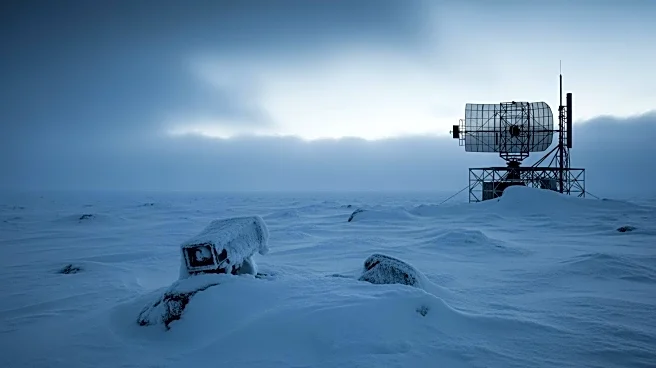
The United States' proposal to deploy the Golden Dome missile defense system in Greenland has elicited strong warnings from Russian officials, who view the initiative as destabilizing and provocative. This development coincides with the expiration of the New
START treaty, the last bilateral agreement limiting U.S. and Russian nuclear arsenals. The absence of this treaty leaves both nations without a formal framework for arms control, raising concerns about nuclear deterrence and verification. Russian Deputy Foreign Minister Sergey Ryabkov has indicated that Russia is prepared to take military and technical measures if the U.S. proceeds with missile deployments in Greenland. Despite U.S. interest in Arctic basing, Denmark, which oversees Greenland's defense, has not authorized such deployments. The U.S. Department of Defense has yet to confirm any basing locations or construction activities related to the Golden Dome.
Why It's Important?
The potential deployment of the Golden Dome missile defense system in Greenland represents a significant shift in U.S. defense strategy, emphasizing the Arctic's strategic importance. This move could escalate tensions between the U.S. and Russia, as it challenges existing strategic balances and arms control agreements. The expiration of the New START treaty further complicates the situation, as it removes a critical verification mechanism between the two nuclear powers. The proposed missile defense system could also strain U.S. relations with European allies, particularly Denmark, which has expressed reluctance to support unilateral American defense initiatives in Greenland. The situation underscores the broader geopolitical implications of Arctic militarization and the challenges of maintaining global strategic stability.
What's Next?
As the U.S. continues to explore missile defense options in the Arctic, diplomatic efforts may intensify to address the concerns of both Russia and European allies. The lack of a formal arms control framework could lead to increased military posturing and a potential arms race in the region. The U.S. may seek to engage in new negotiations with Russia to establish a successor to the New START treaty, aiming to restore some level of arms control and verification. Additionally, the U.S. will need to navigate its relationship with Denmark and other NATO allies to secure support for its Arctic defense strategy. The outcome of these diplomatic efforts will significantly impact the future of U.S.-Russia relations and the strategic landscape of the Arctic.