






What's Happening?
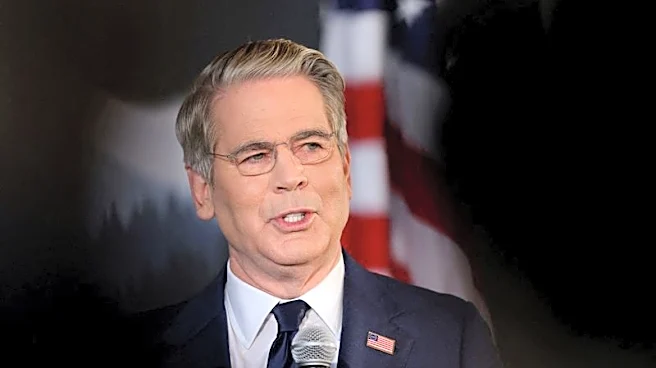
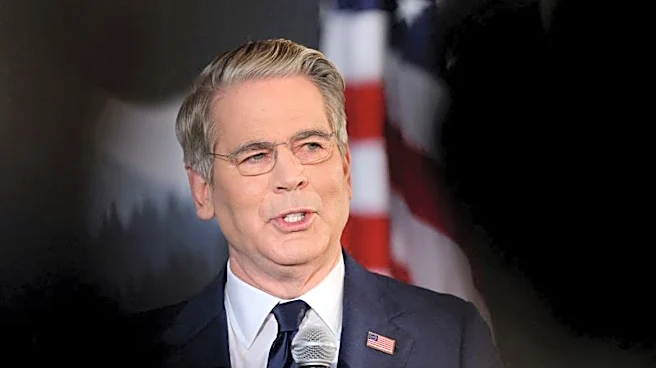
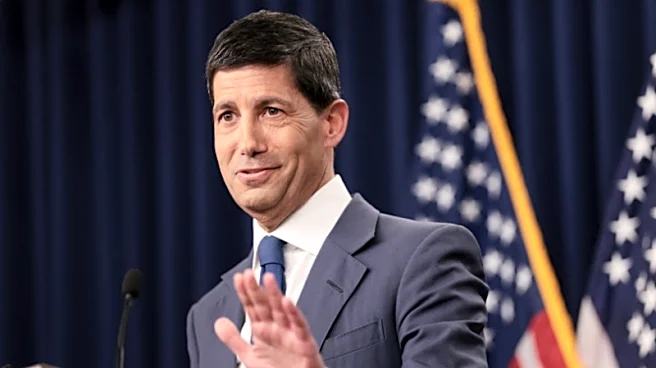
Treasury Secretary Scott Bessent informed the House Financial Services Committee on September 15, 2026, that the administration possesses a method to distribute $5,000 checks to Americans without incurring new borrowing or increasing the national debt
or deficit. This statement was made as the U.S. national debt surpassed $40 trillion. When pressed by Democratic Rep. Juan Vargas of California, Bessent declined to disclose the specific mechanisms for this funding, stating that the Treasury has been working on it for a considerable period. He also suggested that these payments might be executable without requiring congressional approval. Earlier in the same session, Bessent acknowledged that the need to address the deficit is a factor contributing to the 10-year yield, which reached 5%, its highest level since 2007. This creates an apparent contradiction with his later assertion that the $5,000 payment program would not impact the deficit.
Why It's Important?
The proposal for $5,000 checks, coupled with the Treasury Secretary's claim of deficit-neutral funding, carries significant implications for U.S. economic policy and public trust. With the national debt exceeding $40 trillion and borrowing costs rising, any large-scale direct payment program warrants intense scrutiny regarding its fiscal impact. Bessent's refusal to detail the funding mechanism raises concerns about transparency and accountability, especially given the current economic climate where rising yields are already affecting ordinary household expenses like mortgage rates and gasoline prices. The potential for such payments to be made without congressional approval also challenges established legislative oversight, potentially setting a precedent for executive actions with substantial financial consequences. The discrepancy between Bessent's statements on the deficit's impact on borrowing costs and his assurance of a deficit-neutral payment plan could undermine confidence in the administration's fiscal management.
What's Next?
The immediate next step involves whether the Treasury Department will publicly disclose the legal basis and funding source for the proposed $5,000 checks. Without a transparent mechanism that can be scrutinized by Congress and financial markets, the proposal is likely to remain a subject of debate and skepticism. Political reactions are anticipated, with some Democrats already labeling the payments as a 'bribe,' and Republican senators reportedly showing a 'cool' reception to the idea. The administration's ability to implement such a program without congressional approval, as hinted by Bessent, would likely face legal challenges and intense political opposition. Furthermore, the historical context of unfulfilled promises, such as President Trump's previous pledge of $2,000 tariff dividends that never materialized, suggests that the public and lawmakers will be closely watching for concrete details and execution.
Beyond the Headlines
The discussion surrounding the $5,000 checks and their funding mechanism delves into deeper issues concerning fiscal responsibility, executive power, and public communication in a high-stakes economic environment. The lack of transparency regarding the funding method, particularly from the Treasury Secretary, could erode public trust in government financial management. It also highlights the ongoing tension between the executive branch's desire for direct action and the legislative branch's role in fiscal oversight. Ethically, the timing and nature of such a proposal, especially if contingent on political outcomes, could be perceived as an attempt to influence public opinion or elections. The long-term implications could include a precedent for less transparent fiscal policies or increased polarization over economic relief measures, potentially impacting the stability of U.S. financial markets and the perceived credibility of government economic forecasts.