



What's Happening?
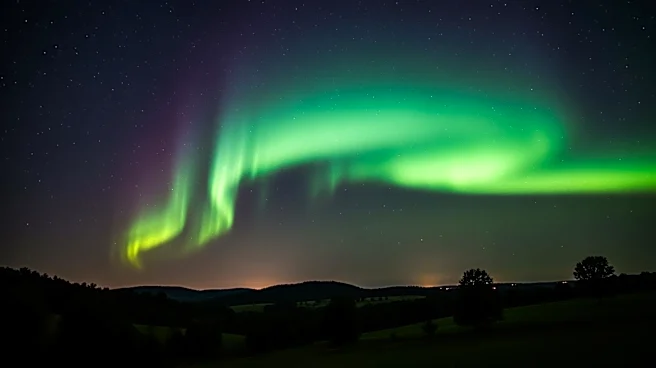
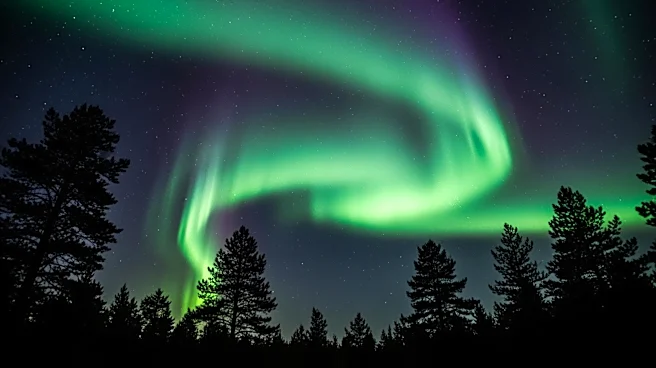
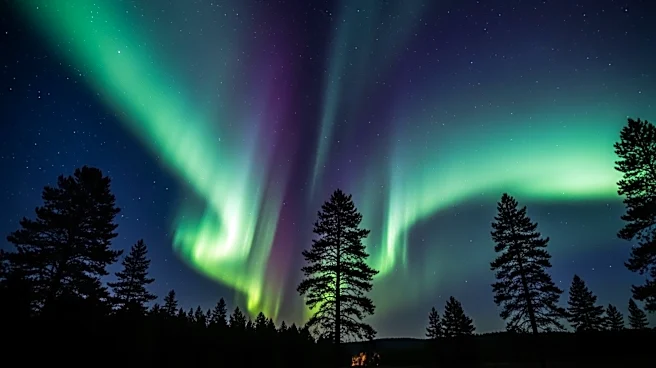
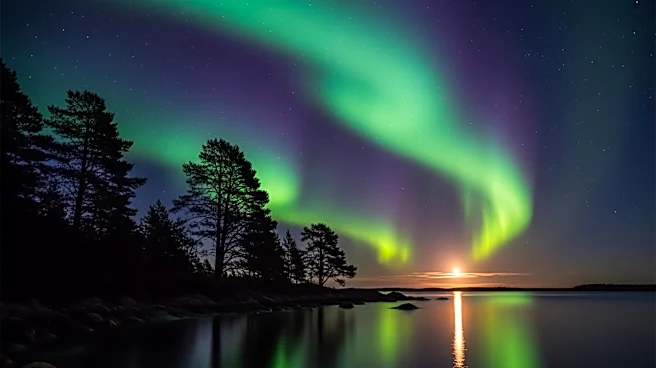
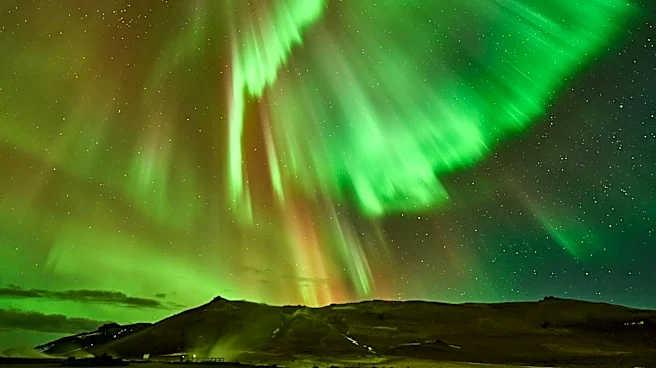
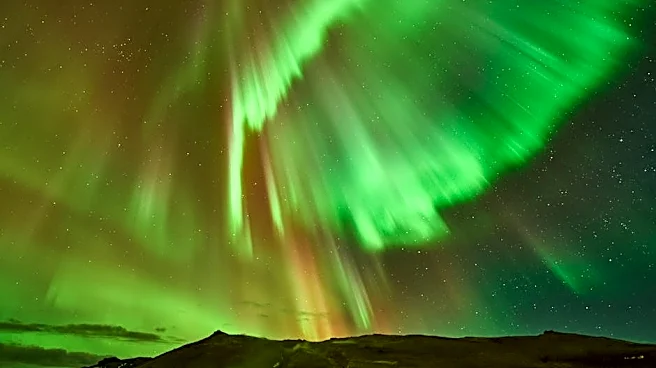
A strong geomagnetic storm is expected to make the northern lights visible in Rhode Island tonight, according to the NOAA's Space Weather Prediction Center. The storm, classified as a G3 with a Planetary K-index of seven, indicates that the auroras will
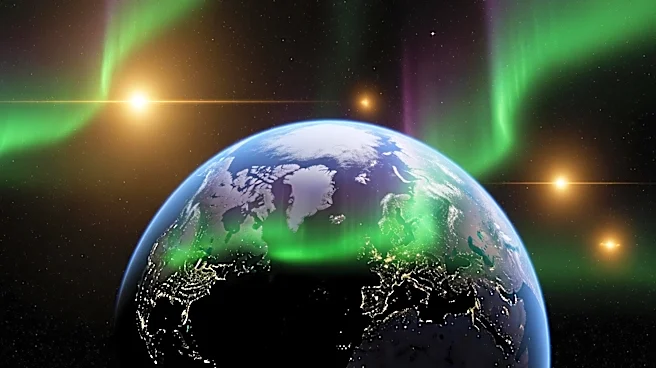
extend further from the poles, potentially reaching the Ocean State. This phenomenon is due to three coronal mass ejections from the Sun, with one having an Earth-directed component. While Rhode Island is on the edge of the visibility zone, clear skies may aid in viewing the lights, which might be more visible through a cellphone camera. Maine is predicted to have the best visibility among New England states.
Why It's Important?
The potential visibility of the northern lights in Rhode Island is significant as it offers a rare opportunity for residents to witness this natural spectacle. Typically confined to higher latitudes, the auroras' appearance in more southern regions underscores the intensity of the geomagnetic storm. This event highlights the dynamic nature of space weather and its ability to impact regions far from the poles. For local communities, it presents a unique chance to engage with natural phenomena, potentially boosting interest in astronomy and science education. Additionally, it may attract visitors to areas with optimal viewing conditions, benefiting local tourism.
What's Next?
Residents interested in viewing the northern lights are advised to seek locations with minimal light pollution, such as open fields or coastal areas away from city lights. The best viewing times are between 10 p.m. and 2 a.m., with the storm expected to peak between 2 p.m. and 5 p.m. ET on June 4 and 8 p.m. and 11 p.m. ET on June 5. Observers can monitor aurora forecasts through various online platforms, including the Space Weather Prediction Center and Aurora Alerts, to increase their chances of witnessing the event.