







What's Happening?
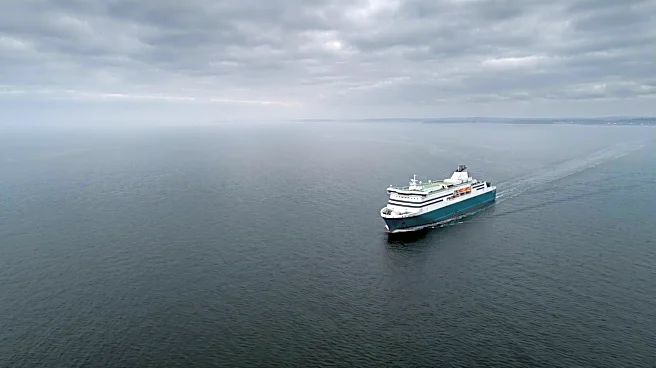
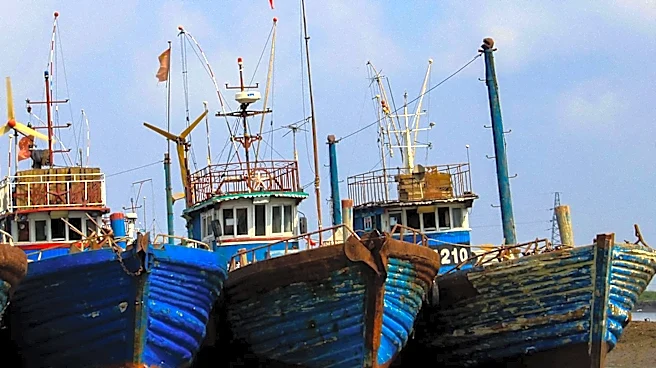
Taiwan's Coast Guard patrol vessel Yunlin recently used a water cannon to drive out two Chinese fishing vessels, Yue Hui Dong Yu 75066 and Jin Sha, detected near the Pratas Islands in the South China Sea. The incident occurred on Thursday when an unidentified
vessel was initially detected 15.5 nautical miles northeast of Pratas Island, 5.5 nautical miles inside Taiwan's prohibited waters. Upon investigation, the Yunlin located the two Chinese fishing vessels 27 nautical miles east of the island, eight nautical miles within the restricted zone. While Yue Hui Dong Yu 75066 complied with repeated demands to leave, Jin Sha refused. After three unsuccessful attempts to force Jin Sha to depart, the Yunlin deployed a water cannon for 30 seconds from approximately 200 meters, followed by another 90-second burst at closer range. The Coast Guard stated that these actions were in accordance with standard procedures for non-lethal means. Following the repulsion, at the request of Jin Sha's crew, the Taiwanese side provided 35 hot meals, towed the vessel out of restricted waters, and handed it over to a Chinese work vessel.
Why It's Important?
This incident highlights the ongoing tensions and sovereignty disputes in the South China Sea, particularly around the Pratas Islands, which are controlled by Taiwan. The use of a water cannon by Taiwan's Coast Guard against Chinese fishing vessels underscores the assertive measures Taiwan is taking to enforce its maritime boundaries and protect its territorial claims. Such actions are significant as they demonstrate Taiwan's resolve to defend its sovereignty against perceived incursions, even from civilian vessels that may be operating under unofficial directives. The humanitarian assistance provided to the Chinese crew after the confrontation also reflects a complex approach, balancing enforcement with international maritime norms. This event could escalate diplomatic friction between Taiwan and China, as Beijing views Taiwan as a renegade province and often asserts its own claims over the South China Sea. The incident also draws international attention to the potential for miscalculation and escalation in a strategically vital region, impacting regional stability and maritime security.
What's Next?
Taiwan's Coast Guard Administration has affirmed its commitment to continue lawfully driving out vessels that cross Taiwan's maritime borders while also providing humanitarian assistance when necessary. They have also called on China to prevent illegal fishing in the area and protect marine resources, indicating a desire for de-escalation and adherence to maritime law. However, China's reaction to this incident will be crucial. Beijing may issue diplomatic protests or increase its maritime presence in the disputed areas, potentially leading to further confrontations. The international community, particularly the United States and its allies, will likely monitor these developments closely, as any escalation could have broader implications for regional security and freedom of navigation in the South China Sea. The incident may also prompt Taiwan to review and potentially strengthen its maritime defense strategies and capabilities around its controlled islands.
Beyond the Headlines
The confrontation near the Pratas Islands is more than just a maritime incident; it is a manifestation of the broader geopolitical struggle between Taiwan and China. The Pratas Islands, strategically located, serve as a critical outpost for Taiwan in the South China Sea, a region rich in resources and vital shipping lanes. China's persistent incursions, often involving fishing vessels or maritime militia, are seen by Taiwan as part of Beijing's 'gray zone' tactics aimed at asserting its territorial claims without resorting to overt military action. Taiwan's response, while firm, also demonstrates a careful calibration to avoid direct military conflict. The provision of humanitarian aid after the water cannon incident highlights the complex and often contradictory nature of cross-strait relations, where geopolitical rivalry coexists with a degree of practical engagement. This ongoing tension in the South China Sea has significant implications for international law, maritime governance, and the delicate balance of power in the Indo-Pacific region, potentially drawing in other regional and global powers concerned about freedom of navigation and adherence to international norms.