
What's Happening?
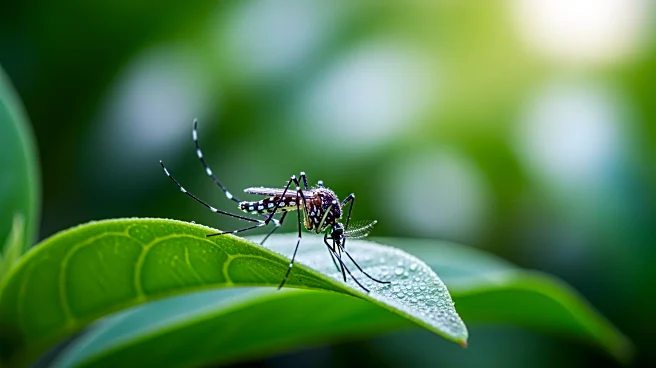
A new study published in Nature highlights the potential impact of climate change on malaria transmission in Africa. Researchers from The Kids Research Institute Australia and Curtin University project
that a middle-of-the-road climate scenario could result in over 500,000 additional malaria deaths and more than 100 million additional cases by 2050. The study emphasizes that the primary driver of this increase would be the disruption caused by extreme weather events, such as floods and cyclones, which damage infrastructure and hinder disease control efforts. The research utilized a statistical modeling framework to analyze 25 years of data on climate, malaria burden, and extreme weather patterns across Africa.
Why It's Important?
The findings of this study underscore the significant threat that climate change poses to malaria control efforts in Africa. The projected increase in malaria cases and deaths could have severe implications for public health systems, particularly in regions already struggling with limited resources. The study challenges conventional assumptions by highlighting that the greatest threat comes from the disruption of health services and infrastructure, rather than gradual ecological changes. This insight calls for the integration of climate resilience into malaria control strategies, emphasizing the need for stronger emergency preparedness and recovery plans.
What's Next?
The study suggests that to mitigate the projected increase in malaria burden, policymakers and global health leaders must incorporate climate resilience into their strategies. This includes developing malaria control tools that are less vulnerable to climate shocks and ensuring faster recovery of health services after extreme weather events. The research advocates for a collaborative approach, combining long-term data and advanced modeling to inform policy and guide action. As climate change continues to pose challenges, the need for evidence-based strategies to protect vulnerable populations becomes increasingly urgent.