




What's Happening?
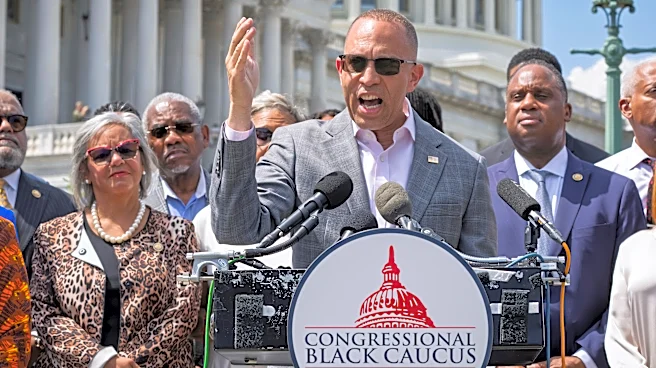
The Congressional Black Caucus, led by House Minority Leader Hakeem Jeffries, is calling on major U.S. corporations to oppose Republican-led redistricting efforts that aim to eliminate majority-Black U.S. House districts. In a letter sent to over 250
companies, the caucus urged these corporations to condemn what they describe as coordinated efforts to suppress Black political representation. This move follows a recent U.S. Supreme Court decision that weakened a key provision of the Voting Rights Act, allowing more Republican states to redraw congressional maps. The caucus's letter highlights the role of corporations that have previously supported racial justice and voting rights, urging them to take a stand against these redistricting plans.
Why It's Important?
This initiative by the Congressional Black Caucus underscores the ongoing battle over voting rights and representation in the U.S. The redistricting efforts by Republican-led states could significantly impact Black political power by diluting representation in Congress. The caucus's call to action places pressure on corporations that have publicly committed to racial equity and democracy to align their actions with their stated values. The outcome of this push could influence corporate political engagement and potentially sway public opinion on the importance of fair representation. It also highlights the broader implications of the Supreme Court's decision on the Voting Rights Act, which could reshape the political landscape in favor of one party.
What's Next?
The response from corporations to the Congressional Black Caucus's call remains to be seen. Companies are being asked to publicly condemn the redistricting plans, engage in discussions with the caucus, and disclose political donations to Republican politicians in states pursuing these changes. The caucus has also suggested that mass protests and federal legislation might be necessary to counteract these efforts. The political dynamics could shift if Democrats secure majorities in Congress and the presidency, potentially leading to new federal voting rights laws. The situation continues to evolve as stakeholders assess their positions and potential actions.