



What's Happening?
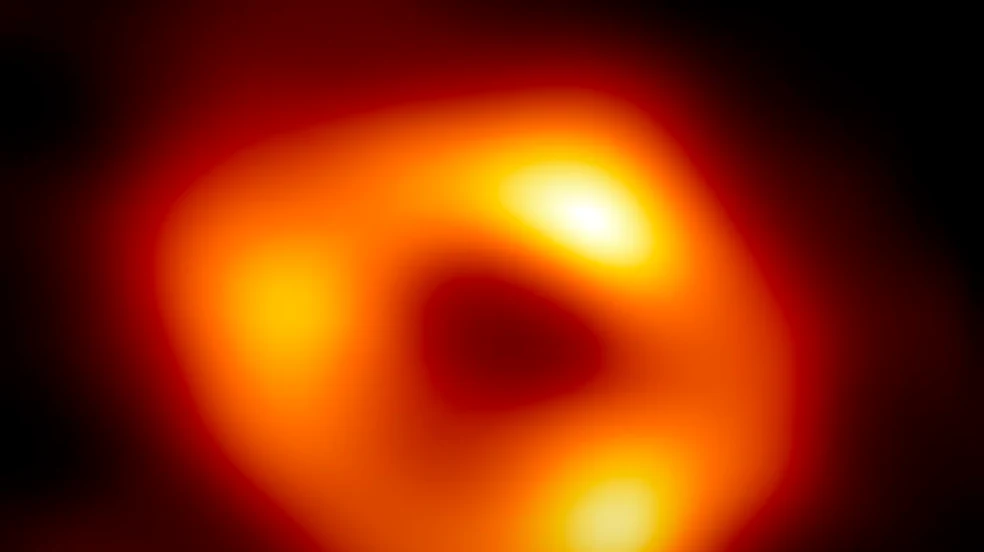
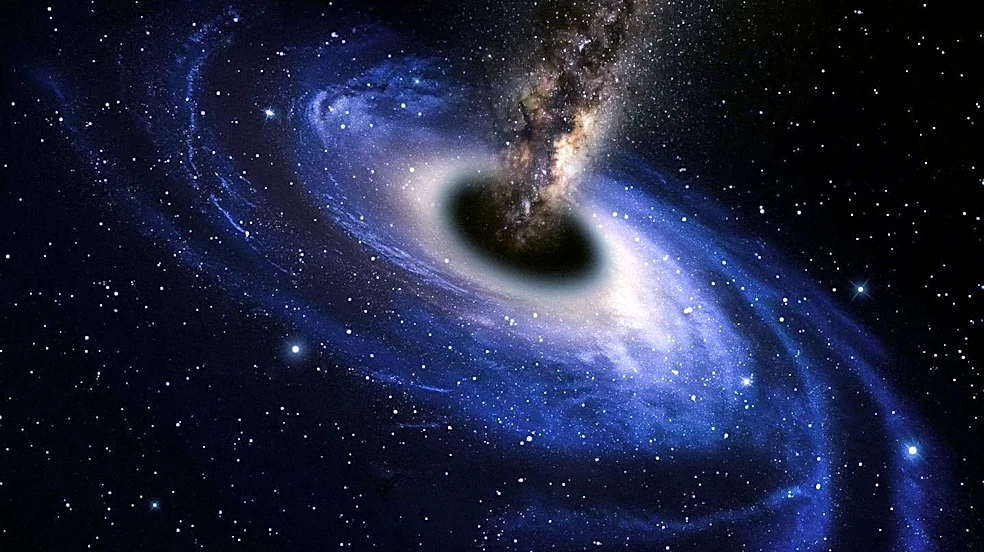
Astronomers are enlisting public volunteers for the 'Black Hole Hunters' project to identify 'missing' black holes within the Milky Way galaxy. Despite estimates suggesting over 10 million black holes have formed in our galaxy's history, only about 70
have been discovered. This initiative aims to bridge that gap by having volunteers analyze data from NASA's Transiting Exoplanet Survey Satellite (TESS). TESS, primarily designed to find exoplanets, collects data on subtle, continuous changes in star brightness, which is crucial for detecting black hole magnification events. These events occur when a black hole, orbiting a companion star, passes between the star and Earth, causing the star's light to temporarily brighten due to the black hole's gravitational lensing effect. Project co-lead Adam McMaster, an astronomer at the University of Southampton in the U.K., stated that volunteers will help pinpoint where telescopes should be directed next. Automated algorithms perform an initial sweep of the TESS data, but human volunteers are essential for sifting through the complexities of cosmic phenomena that can lead to false positives for AI.
Why It's Important?
The 'Black Hole Hunters' project is significant for several reasons. Firstly, it democratizes scientific discovery, allowing the public to contribute directly to cutting-edge astronomical research without requiring specialized expertise. This engagement can foster greater scientific literacy and interest in STEM fields. Secondly, the project addresses a substantial knowledge gap in astrophysics regarding the population of black holes in our own galaxy. Understanding the true number and distribution of black holes is crucial for refining models of stellar evolution, galactic dynamics, and the universe's overall structure. The current discrepancy between theoretical predictions and observed black holes highlights a fundamental missing piece in our cosmic understanding. By leveraging crowdsourcing, astronomers can process vast amounts of data more efficiently than traditional methods, accelerating the pace of discovery and optimizing the use of expensive telescope time for follow-up observations. The success of this project could establish a new paradigm for large-scale astronomical data analysis.
What's Next?
The 'Black Hole Hunters' project, launched on the Zooniverse platform in October 2021, has already attracted nearly 23,000 volunteers who have completed over 12 million classifications. The crowdsourced shortlist of promising signals will enable astronomers to conduct targeted follow-up observations, such as precise measurements of stars to confirm the presence of unseen companions. These measurements are time-consuming and costly, making an accurate shortlist vital for efficient resource allocation. The team previously conducted a similar search using data from SuperWASP, a ground-based survey, and those results are currently being analyzed for publication. Looking ahead, the project plans to expand its search by incorporating observations from other instruments, including the European Space Agency's Euclid mission and NASA's recently launched Nancy Grace Roman Space Telescope. This multi-observatory approach will broaden the scope of the search and potentially lead to thousands of new black hole discoveries, as emphasized by McMaster.
Beyond the Headlines
The 'Black Hole Hunters' initiative extends beyond simply finding black holes; it represents a growing trend in scientific research where citizen science plays a pivotal role in tackling complex data challenges. The project highlights the limitations of artificial intelligence in certain astronomical contexts, particularly when dealing with the 'messy realities' of cosmic data, such as stellar flares and natural stellar pulsations that can mimic black hole signatures. This underscores the irreplaceable value of human pattern recognition and critical thinking, even in an increasingly AI-driven world. Furthermore, the project's reliance on NASA's TESS data, originally intended for exoplanet hunting, demonstrates the versatility and multi-purpose utility of advanced space telescopes. This cross-disciplinary application of data can lead to unexpected discoveries and maximize the scientific return on investment for space missions. The project also fosters a sense of global collaboration in scientific endeavor, uniting researchers and the public in a shared quest for cosmic understanding.