







What's Happening?
Rhode Island is experiencing a prolonged tick season with health officials warning about the continued spread of Lyme disease and the emergence of lone star ticks. While blacklegged tick nymphs, the primary carriers of Lyme disease, typically wane by
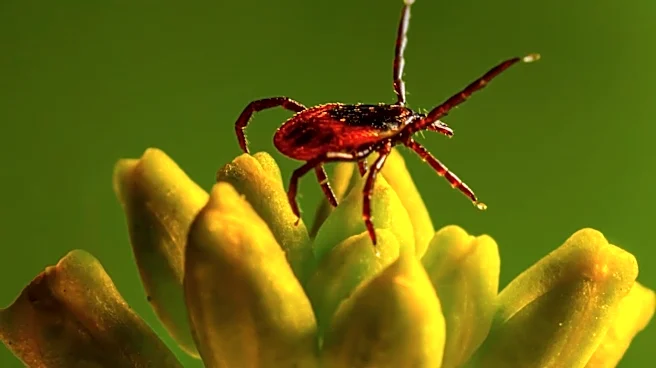
mid-July, tiny tick larvae, often appearing in 'tick bombs,' are now prevalent. Although these larvae are generally harmless as they haven't fed yet, the focus is shifting to lone star ticks, which are not vectors for Lyme but can transmit alpha-gal syndrome, a severe allergy to red meat and dairy. The state recorded 2,563 Lyme disease cases in 2024, with Washington County showing a rate three times the statewide average. Additionally, Rhode Island health officials recently announced the state's second case of Powassan virus, a rare and potentially fatal tick-borne illness, in a Newport County man in his 70s, carried by blacklegged ticks. Scientists anticipate an increase in lone star tick numbers in Rhode Island, following surges in Martha's Vineyard, Nantucket, Bristol County, Massachusetts, and New London County, Connecticut.
Why It's Important?
The extended and evolving tick season in Rhode Island poses significant public health challenges. The continued prevalence of Lyme disease, particularly in heavily wooded areas like Washington County, necessitates ongoing public awareness and preventative measures. The rise of lone star ticks introduces a new health concern with alpha-gal syndrome, which can severely impact individuals' diets and quality of life. This shift in tick species and associated illnesses requires updated public health strategies and educational campaigns. The rare but fatal Powassan virus also highlights the diverse and serious threats posed by ticks. For residents and visitors, understanding these risks and implementing personal protection measures, such as keeping grass short and remaining vigilant, is crucial to mitigate the health impacts. The economic implications could include increased healthcare costs for diagnosis and treatment of tick-borne illnesses, as well as potential impacts on outdoor recreation and tourism if public perception of tick risks intensifies.
What's Next?
Rhode Island health officials will likely continue to monitor tick populations and the incidence of tick-borne diseases, including Lyme disease, alpha-gal syndrome, and Powassan virus. Public health campaigns are expected to emphasize preventative measures such as landscape management (e.g., keeping grass short) and personal protection strategies. Research into tick behavior and disease transmission will be crucial to anticipate future trends and develop more effective interventions. The state may also collaborate with neighboring regions, like Massachusetts and Connecticut, to track the spread of lone star ticks and share best practices for control and public education. Residents should remain vigilant, as adult blacklegged ticks are expected to reemerge in October and November, remaining active until freezing temperatures set in, indicating that the threat of tick-borne illnesses is a year-round concern.
Beyond the Headlines
The changing landscape of tick-borne illnesses in Rhode Island reflects broader ecological shifts, potentially influenced by climate patterns and habitat changes that favor certain tick species. The emergence of alpha-gal syndrome, linked to lone star ticks, introduces a novel public health challenge that extends beyond infectious diseases to dietary restrictions and allergic reactions, impacting daily life and food choices. This situation underscores the interconnectedness of environmental health and human well-being, highlighting the need for interdisciplinary approaches involving entomologists, public health officials, and medical professionals. The ongoing threat of tick-borne diseases also raises questions about the effectiveness of current pest control methods and the potential for developing more sustainable and widespread solutions to manage tick populations in residential and recreational areas. The psychological impact of constant vigilance against ticks, especially for those living in high-risk areas, is also a less obvious but significant implication.