








What's Happening?
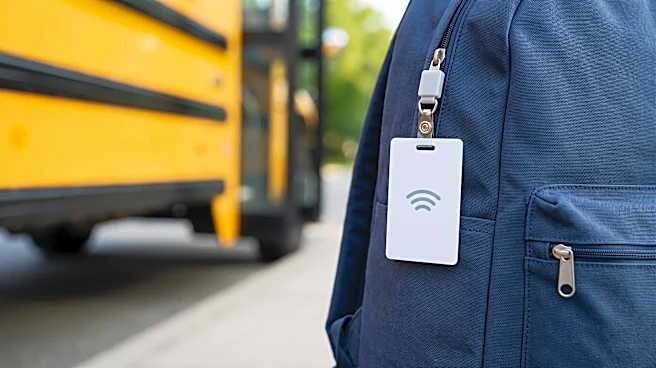
Broken Arrow Public Schools in Oklahoma has launched a pilot program utilizing RFID (Radio-Frequency Identification) cards to monitor students' movements on school buses. These cards, attached to students' backpacks, are scanned upon boarding and exiting
the bus. The system provides real-time updates to parents through a connected mobile application, allowing them to track their children's bus routes and confirm safe drop-offs. The initiative began at Cecil Rhoades Elementary and has since expanded to five other schools within the district, with plans for further expansion throughout the year. Parents like Megan Smith have reported that the system significantly aids in their daily routines, offering peace of mind by enabling them to follow their children's journey to and from school. The primary challenge identified so far has been parents learning to interpret the app's timing correctly.
Why It's Important?
This RFID tracking system represents a significant advancement in school transportation safety and parental communication. For parents, it offers an unprecedented level of transparency and security regarding their children's whereabouts during transit, potentially reducing anxiety and improving logistical planning. The real-time updates can help parents anticipate bus arrival times and ensure their children are met promptly. For school districts, such technology can enhance accountability, improve efficiency in managing bus routes, and provide valuable data for optimizing transportation services. The implementation also highlights a growing trend in leveraging technology to address practical challenges in education and public services, demonstrating how digital solutions can foster greater trust and collaboration between schools and families. The investment in this technology, funded through district bond issues, underscores a commitment to student safety and modernizing school operations.
What's Next?
The Broken Arrow Public Schools district plans to continue expanding the RFID tracking program to more schools throughout the academic year. As the program grows, the district will likely gather more feedback from parents and school staff to refine the system and address any emerging challenges, such as improving parent understanding of the app's functionalities. The success of this pilot could serve as a model for other school districts across the nation considering similar technological upgrades for student safety and transportation management. Further developments might include integrating the tracking data with other school systems or enhancing the app's features based on user experience. The ongoing evaluation of the program's effectiveness and user satisfaction will be crucial in determining its long-term implementation and potential for broader adoption.
Beyond the Headlines
The adoption of RFID technology in school transportation raises broader discussions about the balance between safety, convenience, and privacy. While the system offers clear benefits in terms of student security and parental peace of mind, it also introduces a new layer of data collection on minors. This could lead to conversations about data storage, access, and the potential for misuse, even if unintended. Ethically, the program prompts consideration of how much surveillance is acceptable in the context of child safety and whether such systems could inadvertently normalize constant tracking from a young age. Legally, school districts implementing similar technologies might need to navigate evolving privacy regulations and ensure transparent policies are in place regarding data handling. Culturally, it reflects a societal shift towards greater reliance on technology for monitoring and managing daily life, particularly concerning vulnerable populations like children.