


What's Happening?
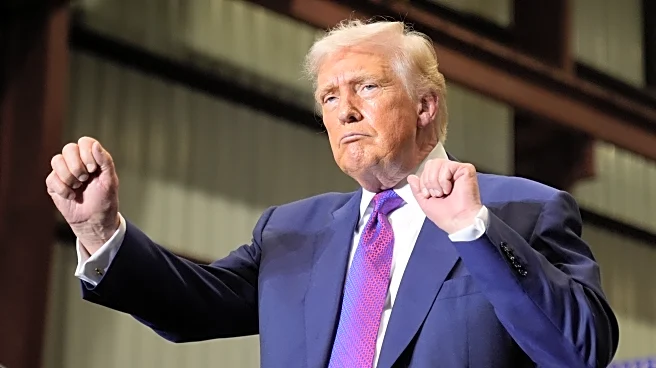
The Trump administration is actively challenging state-level artificial intelligence (AI) regulations, which it views as burdensome to the industry. President Trump issued an executive order directing the Department of Justice to sue states with AI laws
that the administration deems restrictive. This move comes after unsuccessful attempts to pass a federal moratorium on state AI regulations. States like Colorado, California, and Texas are continuing with their AI legislation despite the federal pushback. The administration's actions include potential withholding of federal funding, such as the $42.5 billion Broadband Equity, Access, and Deployment program, from states with non-compliant AI laws. The executive order also tasks the Commerce Department and a White House special adviser with evaluating existing state AI laws.
Why It's Important?
This development highlights the ongoing tension between federal and state governments over the regulation of emerging technologies like AI. The administration's actions could significantly impact how AI is regulated across the U.S., potentially stifling state efforts to address AI-related issues such as discrimination and public safety. States that continue to enforce their AI laws risk losing federal funding, which could affect infrastructure projects and other state initiatives. The situation underscores the broader debate over states' rights versus federal oversight, particularly in rapidly evolving technological fields.
What's Next?
States identified by the administration as having onerous AI laws may face lawsuits and potential loss of federal funding. The outcome of these legal challenges could set precedents for future state-federal interactions regarding technology regulation. Additionally, the administration's actions may prompt states to reconsider their AI legislation or seek compromises to avoid federal penalties. The ongoing negotiations and potential legal battles will likely influence the future landscape of AI regulation in the U.S.