






What's Happening?
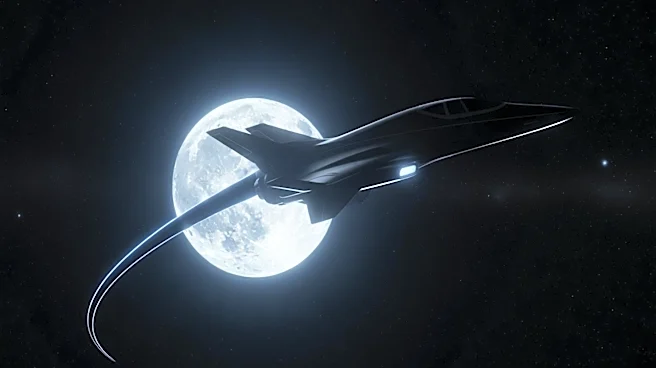
NASA's Artemis II mission has achieved a record-breaking moon flyby, marking the farthest human travel ever. The mission involves a six-hour lunar fly-around, providing the crew with unprecedented views of the moon's far side. The Artemis II mission is NASA's first
return to the moon since the Apollo era, with a crew of three Americans and one Canadian. The mission aims to set the stage for future lunar landings near the moon's south pole.
Why It's Important?
The Artemis II mission represents a significant milestone in space exploration, demonstrating NASA's ability to conduct complex lunar missions. By achieving a record-breaking distance, the mission showcases the advancements in space technology and the potential for future exploration beyond Earth's orbit. The mission's success is crucial for the Artemis program's goal of establishing a sustainable human presence on the moon, which could serve as a foundation for future missions to Mars and beyond.
What's Next?
Following the Artemis II mission, NASA plans to continue its efforts to return humans to the moon's surface, with the goal of establishing a permanent lunar base. The data and experience gained from Artemis II will inform future missions and help develop the necessary infrastructure for long-term lunar exploration. The mission's success also strengthens international partnerships and sets the stage for further collaboration in space exploration.