






What's Happening?
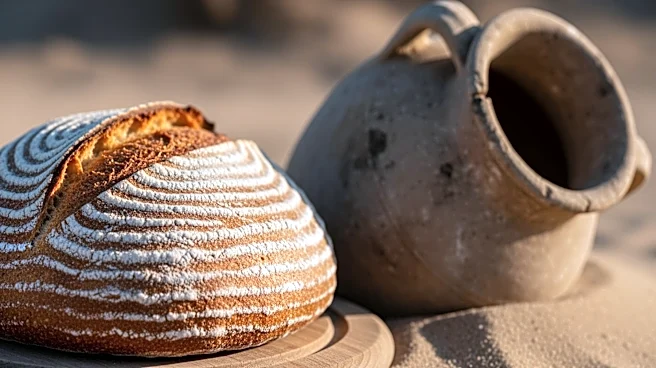
Researchers have discovered yeast in the gut of Oetzi the Iceman, a 5,300-year-old mummy found in the Alps. This yeast, which thrives in cold conditions, was used to bake sourdough bread. The mummy, discovered in 1991, has been preserved at a constant
temperature, allowing scientists to study its microbiome. The yeast, believed to have entered Oetzi's body post-mortem, was reproduced in a lab setting. The study, published in the journal Microbiome, highlights the presence of both ancient and modern microbial life in the mummy, offering insights into ancient human life and potential environmental applications.
Why It's Important?
The discovery of ancient yeast in Oetzi's body provides a unique glimpse into the microbiome of early humans, which can inform current understanding of human evolution and health. The ability of the yeast to consume phenol, a chemical used in the mummy's preservation, suggests potential environmental applications, such as breaking down contaminants. This research bridges ancient and modern microbial ecosystems, offering potential for biotechnological innovations. The study also underscores the importance of preserving archaeological finds for scientific research, which can lead to unexpected discoveries with practical applications.
What's Next?
Future research may explore the potential of using the yeast for other applications, such as brewing beer, as suggested by the scientists. Additionally, further studies could investigate the impact of the yeast on the mummy's preservation and explore other microbial life forms present in Oetzi's body. This could lead to broader applications in biotechnology and environmental science, as well as deepen understanding of ancient human diets and health. Continued interdisciplinary research will be crucial in unlocking the full potential of these findings.
Beyond the Headlines
The study of Oetzi's microbiome reveals a complex ecosystem where ancient and modern microbes coexist. This challenges the notion of mummies as static time capsules and highlights the dynamic nature of microbial life. The presence of ancient gut bacteria, similar to those found in non-industrialized populations, suggests shifts in human microbiomes due to modern diets and lifestyles. This research could influence future studies on the impact of diet on gut health and the preservation of microbial diversity. It also raises ethical considerations regarding the handling and study of ancient human remains.