


What's Happening?
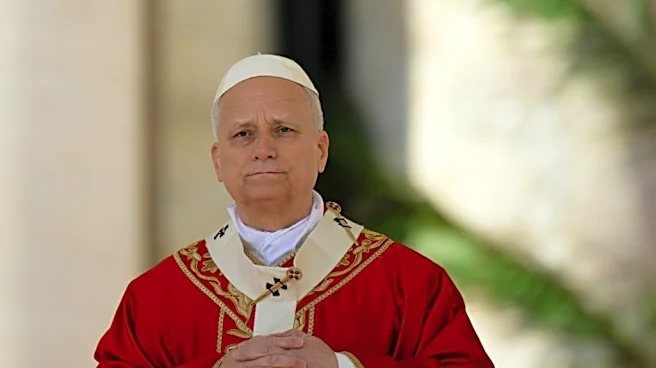
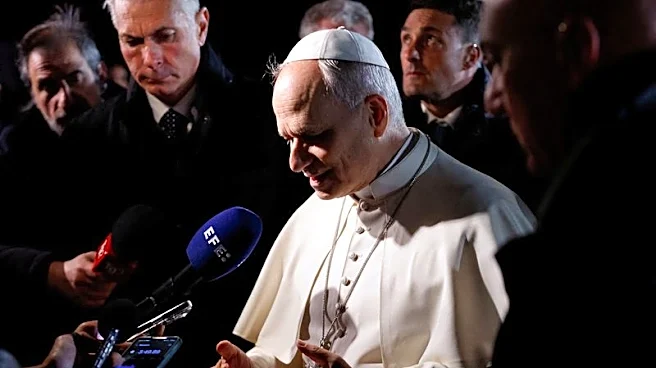
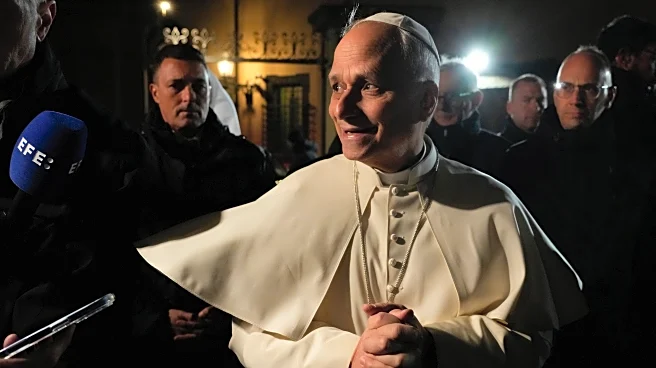
Pope Leo XIV has reinstated the traditional Holy Thursday foot-washing ritual for priests, marking a return to pre-Francis era practices. This change departs from Pope Francis' inclusive approach, which involved washing the feet of incarcerated individuals,
women, and non-Catholics. Pope Leo conducted the ceremony at the Basilica of St. John Lateran, washing the feet of 12 priests from the Diocese of Rome. His actions emphasize the theological connection between Holy Thursday, the institution of the Eucharist, and the ministerial priesthood. Pope Leo's decision reflects his focus on the role and needs of priests, as he has expressed concern over potential burnout and dissatisfaction among clergy members.
Why It's Important?
The reinstatement of the traditional foot-washing ritual by Pope Leo XIV signifies a shift in the Vatican's approach to Holy Thursday ceremonies, potentially impacting the Catholic Church's internal dynamics. By focusing on priests, Pope Leo highlights the importance of the clergy's role in the church, which may influence how the church addresses issues of priestly burnout and dissatisfaction. This move could also affect the church's relationship with laypeople and marginalized groups, as it contrasts with Pope Francis' more inclusive practices. The decision may lead to discussions within the church about the balance between tradition and inclusivity.
What's Next?
Pope Leo XIV's decision may prompt reactions from various stakeholders within the Catholic Church, including clergy, laypeople, and marginalized groups. The church may need to address concerns about inclusivity and the role of priests in the broader context of its mission. Additionally, Pope Leo's focus on the needs of priests could lead to further initiatives aimed at supporting clergy members and addressing issues of burnout and dissatisfaction. The church may also engage in discussions about the theological implications of the foot-washing ritual and its significance in the context of Holy Thursday and the Eucharist.