
What's Happening?
Saudi Arabia has successfully restored its East-West oil pipeline to full operational capacity following attacks that occurred during the US-Israel conflict with Iran. The pipeline, crucial for global
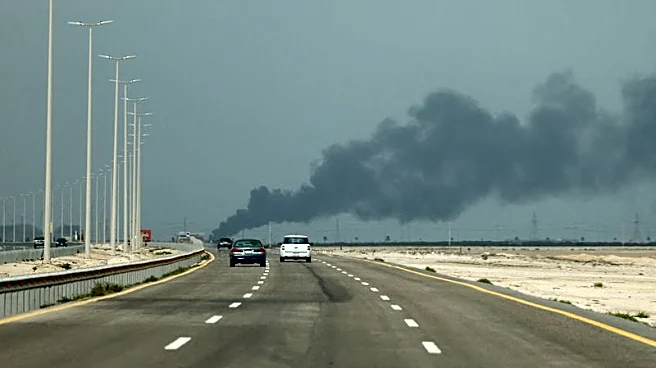
oil supply, is now pumping approximately seven million barrels of oil per day. The Ministry of Energy highlighted the rapid recovery as a testament to the resilience and crisis management capabilities of Saudi Aramco and the broader energy infrastructure of the Kingdom. The attacks had previously reduced the pipeline's output by 700,000 barrels per day. Additionally, the Manifa oilfield has also been restored to its full capacity of 300,000 barrels per day, although efforts are still underway to restore the Khurais oilfield, which lost 300,000 barrels per day in capacity. The attacks, which have not been attributed to any specific party, are part of a broader regional conflict involving Iran, which has targeted US assets and affected several Gulf Cooperation Council (GCC) countries.
Why It's Important?
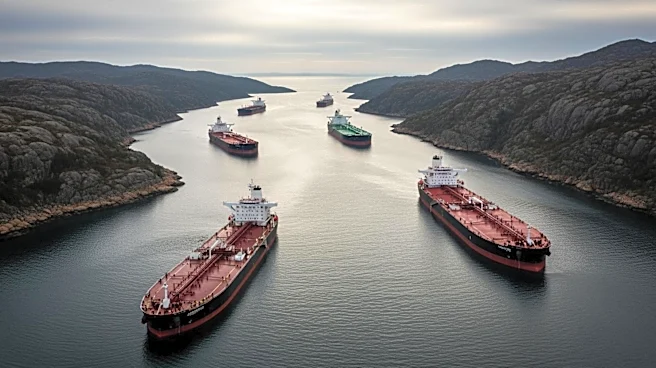
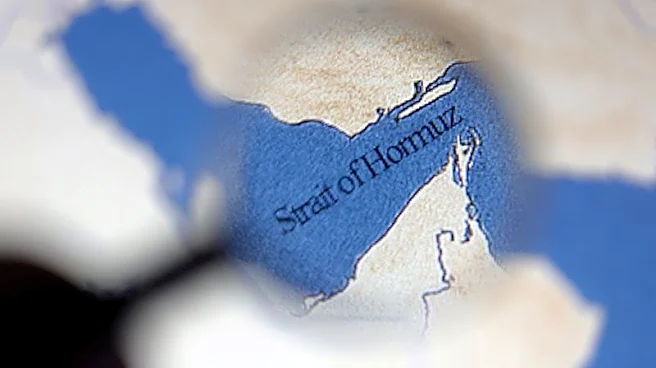
The restoration of the East-West pipeline is significant for global energy markets, as it alleviates some of the pressure caused by the effective closure of the Strait of Hormuz by Iran. This strait is a vital passage for about one-fifth of the world's oil supply, and its blockade has led to increased energy prices worldwide. The quick recovery of Saudi Arabia's oil infrastructure helps stabilize the global oil supply chain and supports economic stability. The situation underscores the geopolitical tensions in the region and their potential to disrupt global energy markets. The ability of Saudi Arabia to quickly restore its oil production capacity is crucial for maintaining the reliability of energy supplies to both local and international markets.
What's Next?
While the pipeline has been restored, the broader geopolitical tensions in the region remain unresolved. The fragile ceasefire between the United States and Iran has not fully alleviated the risks to shipping in the Strait of Hormuz, with significantly reduced ship transits compared to pre-conflict levels. Continued diplomatic efforts will be necessary to ensure long-term stability in the region. Additionally, Saudi Arabia and its allies may need to enhance their security measures to protect critical energy infrastructure from future attacks. The international community will likely continue to monitor the situation closely, given its implications for global energy security and economic stability.