






What's Happening?
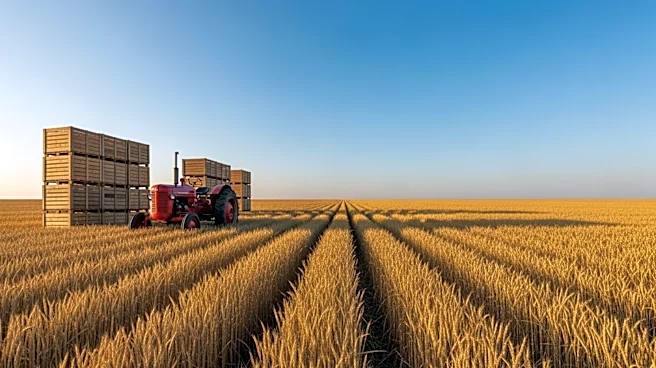
The Bagg Bonanza Farm in Mooreton, North Dakota, offers a historical glimpse into early industrial agriculture. Operated by Frederick and Sophia Bagg from 1915 to 1935, the farm spanned up to 7,000 acres and functioned like a factory, utilizing modern
business practices of the time. It primarily produced wheat, corn, and clover, facilitated by the completion of railroads that enabled large-scale harvests to reach markets. Today, the farm is preserved as a museum, showcasing its historical significance as one of the best-preserved examples of a bonanza farm in the United States.
Why It's Important?
The Bagg Bonanza Farm represents a significant period in agricultural history where farming operations began to adopt industrial methods. This transition marked a shift in how agricultural production was managed, influencing modern farming practices. The farm's preservation as a museum allows for educational opportunities and cultural preservation, highlighting the evolution of agricultural techniques and their impact on rural economies. It serves as a reminder of the role of infrastructure, like railroads, in transforming agricultural productivity and market access.