



What's Happening?
U.S. Representative Steve Womack, a Republican from Arkansas, has voiced concerns regarding President Trump's recent proposal to provide every American adult with a $5,000 'Trump Dividend' if the Republican Party maintains its majority in the U.S. Congress.
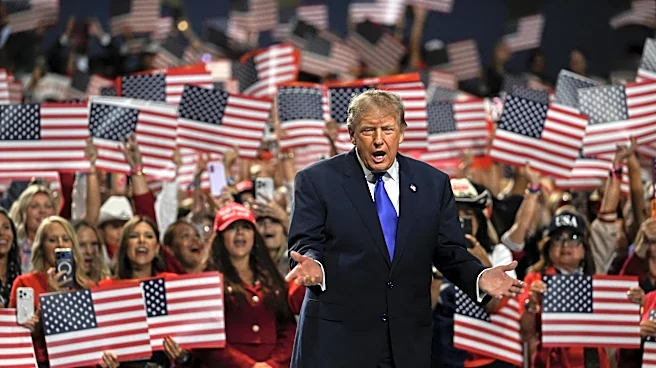
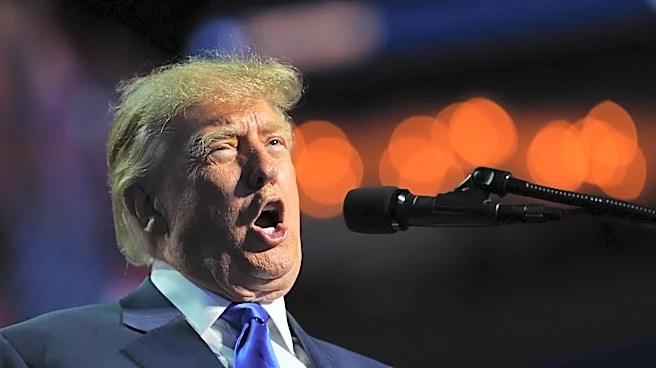
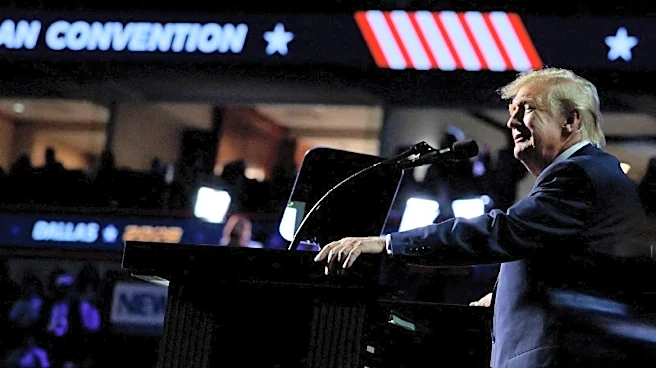
President Trump announced this plan at the Republican's first-ever midterm convention, stating the dividends would be distributed if the GOP retains control of both the U.S. House and Senate after the November 3 midterm elections. Womack stated, 'I have not seen the proposal in full, but on its surface, I have concerns.' Other Arkansas GOP members, including U.S. Representatives French Hill and Bruce Westerman, did not explicitly support the plan, instead emphasizing the importance of long-term economic policies. State Democrats, however, were critical, with Marcus Jones, chairman of the Democratic Party of Arkansas, calling the plan 'B.S.' The proposed dividend plan is estimated to cost over $1 trillion, at a time when the country faces an annual deficit of approximately $2 trillion and a national debt exceeding $40 trillion. The implementation of such a plan would likely require Congressional approval.
Why It's Important?
President Trump's 'Trump Dividend' proposal carries significant implications for the U.S. economy and political landscape. The estimated cost of over $1 trillion would substantially add to the national debt, which recently surpassed $40 trillion, and exacerbate the existing $2 trillion annual deficit. This could lead to increased inflation or necessitate cuts in other federal programs, impacting various sectors of the economy and public services. The mixed reactions from within the Republican Party, particularly from figures like Representative Womack, highlight potential divisions on fiscal policy and the party's approach to economic stimulus. For voters, the proposal could influence midterm election outcomes, as it directly addresses financial relief for individuals. However, the skepticism from some Republicans and strong opposition from Democrats suggest a contentious legislative battle if the plan were to advance. The debate also underscores differing philosophies on economic growth, with some favoring direct payments and others advocating for long-term policy changes to foster business growth and job creation.
What's Next?
The immediate next step for President Trump's 'Trump Dividend' proposal will be its reception and debate leading up to the November 3 midterm elections. The plan's viability hinges on the Republican Party retaining control of both the U.S. House and Senate. Should Republicans secure majorities, the proposal would then need to be formally introduced in Congress, where it would face scrutiny and require legislative approval. Given the mixed reactions from within the GOP and strong opposition from Democrats, securing bipartisan support appears unlikely, potentially leading to a partisan battle. Stakeholders, including economic analysts, will closely monitor the fiscal implications and feasibility of funding such a large-scale payout. Voters will likely weigh the promise of direct financial relief against concerns about national debt and economic stability as they head to the polls. The outcome of the midterm elections will be the primary determinant of whether this proposal moves from a campaign promise to a legislative agenda item.
Beyond the Headlines
The 'Trump Dividend' proposal extends beyond immediate economic relief, touching upon deeper political and economic philosophies. Ethically, it raises questions about the role of government in direct wealth redistribution versus fostering economic conditions for individual prosperity. Legally, the mechanism for distributing such funds and ensuring equitable access would need careful consideration, especially given the potential for administrative complexities and fraud. Culturally, the proposal taps into a broader debate about economic inequality and the effectiveness of different approaches to address it, from supply-side economics to direct stimulus measures. In the long term, if implemented, such a large-scale direct payment could set a precedent for future government interventions in personal finances, potentially shifting public expectations regarding federal support. It also highlights the ongoing tension between short-term economic boosts and long-term fiscal responsibility, a recurring theme in U.S. economic policy debates.