
What's Happening?
Agriculture Commissioner Doug Goehring has announced the opening of applications for the 2026 Specialty Crop Grants in North Dakota. These grants are designed to enhance the competitiveness of specialty
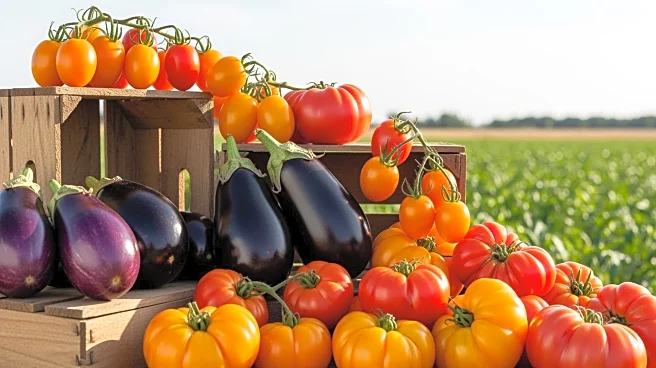
crops within the state. Eligible projects include those focused on pest and disease control, the development of new seed varieties, specialty crop research, and initiatives to increase nutrition knowledge and consumption of these crops. The North Dakota Department of Agriculture (NDDA) will distribute the funds through a competitive grant process, although the exact allocation from the USDA's Agriculture Marketing Service is yet to be determined. Specialty crops, as defined by the USDA, include fruits, vegetables, tree nuts, dried fruits, horticulture, and nursery crops. In North Dakota, this encompasses crops such as dry beans, dry peas, lentils, potatoes, and various vegetables.
Why It's Important?
The announcement of these grants is significant as it supports the agricultural sector in North Dakota, particularly focusing on specialty crops that are crucial for the state's economy. By funding projects that enhance crop competitiveness, the grants aim to boost agricultural innovation and sustainability. This can lead to improved crop yields, better pest and disease management, and increased market opportunities for farmers. Additionally, by promoting nutrition knowledge and consumption, these grants can have a positive impact on public health. The initiative also aligns with broader agricultural policies aimed at supporting diverse crop production and environmental conservation.
What's Next?
The next steps involve the NDDA receiving the allocation amount from the USDA and proceeding with the competitive grant process. Organizations, institutions, and individuals interested in applying for the grants will need to prepare proposals that meet the eligibility criteria. As the process unfolds, stakeholders in the agricultural sector will likely monitor the distribution of funds and the implementation of funded projects. The outcomes of these projects could influence future agricultural policies and funding priorities in North Dakota.