








What's Happening?
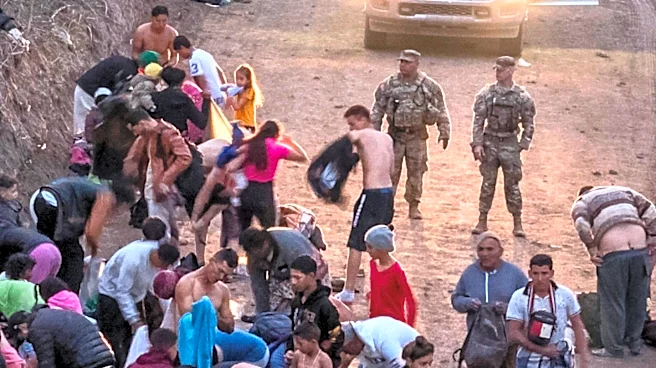
Spanish Prime Minister Pedro Sánchez addressed the Spanish parliament regarding the Ceuta crisis, asserting that his government had no prior warnings about the mass influx of migrants from Morocco in July. He stated that it is "absurd to think that the government knew
and did nothing" and emphasized that no intelligence service had anticipated the crossing. Sánchez defended the actions of officers who prioritized defending human life during the mass crossing and highlighted the swift return of over 90% of the migrants within 72 hours, calling it one of the fastest return processes in European history. He attributed the surge to social media messaging and international far-right movements. Despite a police report suggesting Moroccan orchestration, Sánchez maintained there was no definitive proof of Moroccan authorities' involvement and stressed the need for continued cooperation with Morocco to manage the crisis. He also pledged to publish a full dossier of documents for public scrutiny, stating the government has "nothing to hide."
Why It's Important?
This situation is important as it highlights the complex challenges faced by European nations, including Spain, in managing irregular migration and securing borders. The denial of prior warnings and the subsequent pledge for transparency aim to address public and political scrutiny over the government's handling of the crisis. The rapid return of migrants, while lauded by Sánchez, also raises questions about the humanitarian aspects of border control and international obligations. The incident has strained relations with Morocco and sparked intense political debate within Spain and the European Union regarding border control, migrant reception, and the role of neighboring countries. The Prime Minister's emphasis on continued cooperation with Morocco, despite underlying tensions, underscores the intricate diplomatic efforts required to address cross-border issues. The crisis also serves as a focal point for discussions on the influence of social media in migration patterns and the broader impact of international far-right movements on national security and social cohesion.
What's Next?
Prime Minister Sánchez has committed to publishing a full dossier of documents related to the Ceuta crisis, which will allow for public and parliamentary examination of the government's information and decision-making process. This move is intended to ensure transparency and address criticisms regarding the handling of the influx. Spain will also seek support from EU institutions, such as Frontex, for a permanent presence at the borders of Ceuta and Melilla, and request a special Europol mission to monitor irregular migration. Additionally, the Spanish government plans to ask the EU to recognize Ceuta and Melilla as outermost regions of the bloc, which would grant them special customs union status. The ongoing investigations into the potential role of Moroccan authorities in orchestrating the mass crossing will continue, and the future of cooperation between Spain and Morocco on border management will likely be subject to further negotiations and adjustments. The political debate within Spain and the EU regarding migration policies and border security is expected to intensify.
Beyond the Headlines
The Ceuta crisis extends beyond immediate border control issues, touching upon deeper ethical, legal, and cultural dimensions. The Prime Minister's defense of officers who chose to "defend human life" rather than solely focusing on border defense highlights the moral dilemmas inherent in managing large-scale migrant arrivals. The accusation of social media messaging and international far-right movements fueling the influx points to the evolving nature of migration triggers, where digital platforms can be exploited to mobilize and direct human movement, potentially creating new challenges for national security and humanitarian aid. The debate over whether Morocco orchestrated the event, even without definitive proof, underscores the delicate balance of international relations and the potential for geopolitical tensions to manifest in migration crises. Furthermore, the incident brings to the forefront the long-standing historical and territorial claims over Ceuta and Melilla, which are Spanish enclaves on the North African coast, and their symbolic importance in both Spanish and Moroccan national identities. The call for EU recognition of these enclaves as outermost regions could have significant long-term implications for their economic and political integration within the European framework.