


What's Happening?
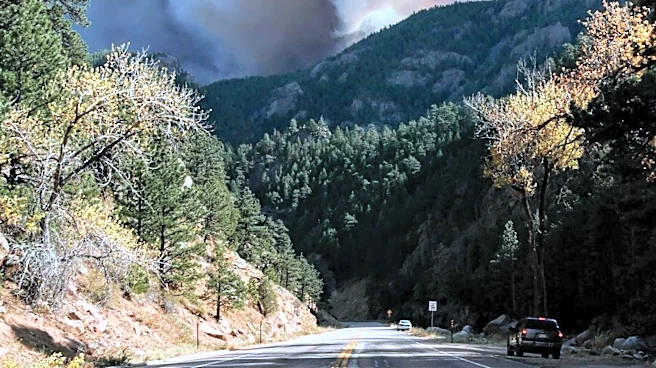
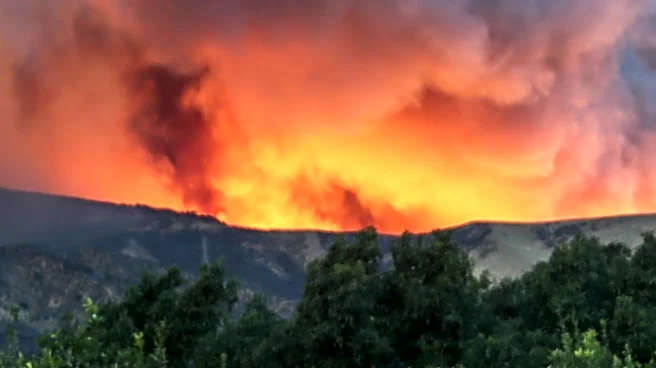
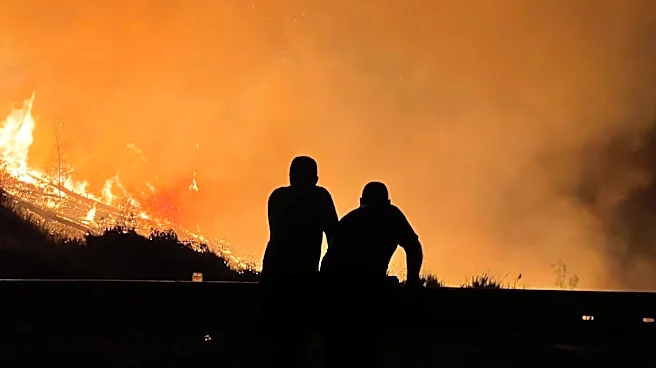
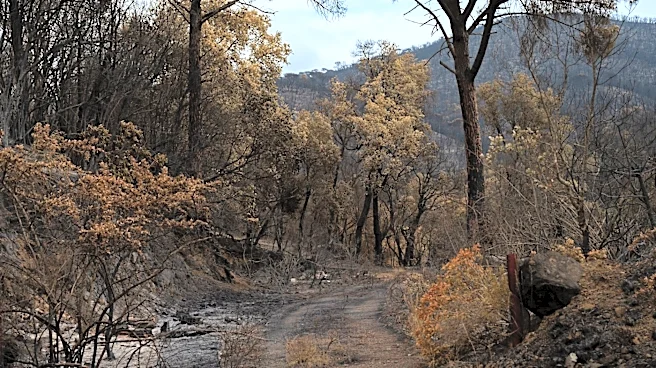
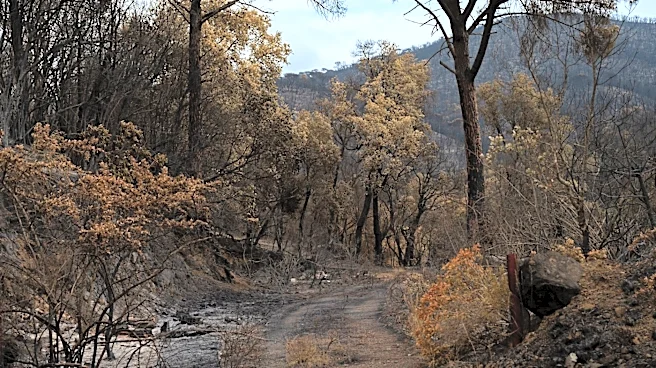
A wildfire known as the 'Bug Fire' has rapidly expanded along the California-Nevada border, burning 15,000 acres and leading to evacuations near Reno. The fire began on Saturday near Highway 395 and Bringman Road in Lassen County, approximately seven
miles from the state line. By Saturday night, it had already consumed over 6,500 acres, and by Sunday evening, it had spread to more than 11,000 acres. The fire has extended into Sierra County and Washoe County in Nevada, north of Reno. As of Monday morning, containment was at 3%, according to Cal Fire. Evacuation orders are in place for areas north of Cold Springs and the Reno Stead Airport. A second fire, the 'Fred Mountain Fire,' has also prompted evacuations northeast of the Bug Fire. The cause of the Bug Fire is currently under investigation, and there have been no reports of damage or injuries.
Why It's Important?
The Bug Fire's rapid spread and the resulting evacuations highlight the ongoing threat of wildfires in the region, exacerbated by dry conditions and high temperatures. This situation underscores the challenges faced by emergency services in managing multiple fires simultaneously, as seen with the concurrent Fred Mountain Fire. The evacuations affect local communities, disrupting lives and potentially impacting the local economy, particularly if the fires threaten infrastructure or businesses. The fire's proximity to Reno, a significant urban area, raises concerns about air quality and public health, as smoke can travel and affect a larger population. The situation also emphasizes the need for effective fire management strategies and resources to prevent such incidents from escalating.
What's Next?
Efforts to contain the Bug Fire will continue, with firefighting teams working to establish control lines and protect threatened areas. Authorities will likely update evacuation orders as the situation evolves, and residents are advised to stay informed through official channels like the Washoe Regional Emergency Information Center. Investigations into the fire's cause may lead to preventive measures or policy changes aimed at reducing the risk of future wildfires. The response to this fire could also influence future resource allocation and preparedness strategies in the region, as officials assess the effectiveness of current firefighting tactics and community response plans.