
What's Happening?
President Trump is facing increasing pressure from environmentalists and advocacy groups to impose a windfall profits tax on major oil companies benefiting from the Iran war. The call for action comes
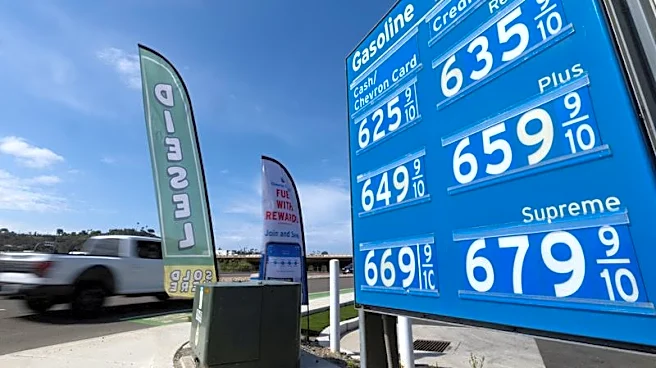
as companies like ExxonMobil and Chevron report significant profit increases, with Chevron's earnings soaring nearly 400% to $12 billion and ExxonMobil's profits more than doubling to $14.5 billion in the second quarter. Critics argue that Trump's policies have favored the fossil fuel industry, enabling these profits. Despite acknowledging that oil companies are making excessive profits, Trump has historically supported the industry by easing environmental regulations and promoting fossil fuel expansion. Advocacy groups, including Food and Water Watch, are urging Congress to ban fossil fuel exports and implement a windfall profits tax to alleviate the financial burden on American families, who have paid significantly more for fuel since the onset of the Iran war.
Why It's Important?
The debate over a windfall profits tax highlights the broader issue of energy policy and its impact on consumers. The significant profits reported by oil companies amid rising fuel prices have sparked concerns about corporate profiteering at the expense of the public. Implementing a windfall tax could potentially redistribute some of these profits to American families, who are facing higher costs at the pump. However, the Trump administration's reluctance to restrict fossil fuel exports or impose additional taxes reflects a commitment to maintaining energy industry support. This situation underscores the tension between economic growth driven by fossil fuels and the need for consumer protection and environmental responsibility. The outcome of this debate could influence future energy policies and the balance between industry interests and consumer welfare.
What's Next?
As advocacy groups continue to push for legislative action, the focus will likely shift to Congress, where proposals for a windfall profits tax and export restrictions may be debated. The response from political leaders and the oil industry will be crucial in determining the feasibility of these measures. Additionally, public opinion and pressure from environmental organizations could play a significant role in shaping the policy landscape. The ongoing discussion may also prompt further scrutiny of the Trump administration's energy policies and their long-term implications for both the economy and the environment.