



What's Happening?
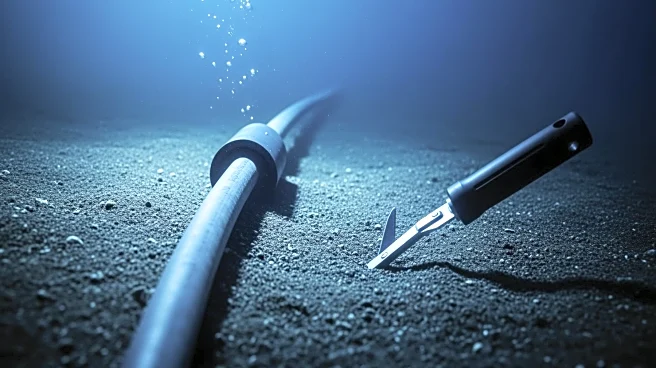
Finnish police have made significant progress in their investigation into the damage of an undersea telecommunications cable owned by the operator Elisa. The cable, which runs across the Gulf of Finland from Helsinki to Estonia, was reportedly sabotaged
by the cargo vessel 'Fitburg'. The vessel, en route from Russia to Israel, was seized by Finnish authorities on suspicion of dragging its anchor and damaging the cable. Two crew members have been arrested, and two others have been placed under a travel ban. The crew consists of nationals from Russia, Georgia, Kazakhstan, and Azerbaijan. Finnish authorities have stated that the cable is currently inoperable, but the full extent of the damage is still being assessed. The incident is part of a series of similar occurrences in the Baltic Sea region, where gas pipelines, power cables, and telecom links have been damaged, raising concerns about hybrid threats from Russia.
Why It's Important?
The investigation into the cable damage highlights growing concerns in Europe about hybrid threats, particularly from Russia, following its military actions in Ukraine. The Baltic Sea region has seen multiple incidents of infrastructure sabotage, which could have significant implications for regional security and international relations. The disruption of telecommunications infrastructure can have wide-ranging effects on communication and economic activities, potentially impacting businesses and governments reliant on these networks. The involvement of a vessel with a multinational crew further complicates the geopolitical dynamics, as it involves multiple countries and raises questions about maritime security and international cooperation in addressing such threats.
What's Next?
The investigation is ongoing, with Finnish authorities continuing to question the crew members and assess the damage to the cable. The outcome of the investigation could lead to diplomatic discussions between Finland, Estonia, and Russia, as well as other countries involved. There may be calls for increased security measures in the Baltic Sea to prevent future incidents. The situation also underscores the need for international collaboration in safeguarding critical infrastructure against potential sabotage. The findings of the investigation could influence future policies on maritime security and international cooperation in the region.