



What's Happening?
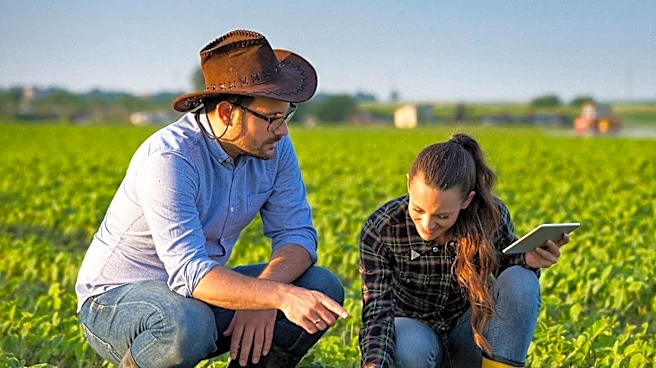
Farm link programs are emerging as a crucial solution to address the significant challenge of land access for young farmers in the U.S. These programs connect retiring farmers and other landowners with beginning farmers seeking land. According to the 2022
Census of Agriculture, 38% of U.S. producers are 65 or older, while only 9% are under 35. The American Farmland Trust estimates that nearly 300 million acres of farm and ranch land will transition to new owners over the next 15 to 20 years. Organizations like Land For Good have identified over 50 such programs nationwide, offering services ranging from basic listing sites to comprehensive support for land transfer. The National Young Farmers Coalition's 2022 survey found that 59% of young farmers rated finding affordable land as their biggest hurdle.
Why It's Important?
The aging demographic of U.S. farmers and the high cost of agricultural land pose a significant threat to the future of American farming. An acre of U.S. farm real estate, including buildings, averaged $4,500 in 2026, a 3.4% increase from 2025, driven by competition from developers and investors. This makes it increasingly difficult for new farmers to enter the industry, potentially leading to a decline in domestic food production and the loss of agricultural land to non-farming uses. Farm link programs are vital for ensuring the continuity of farming operations, preserving agricultural landscapes, and fostering a new generation of farmers. They facilitate the transfer of knowledge and land, which is critical for maintaining food security and rural economies.
What's Next?
The expansion and increased utilization of farm link programs are anticipated as more farmers approach retirement and land prices continue to rise. States like Minnesota are already implementing incentives, such as tax credits for landowners who rent or sell to beginning farmers, to encourage these transitions. The success of these programs will depend on continued funding, outreach, and the development of comprehensive support services, including training for new farmers and assistance with succession planning. Organizations like American Farmland Trust and Land For Good will likely continue to play a central role in advocating for policies and resources that support land access and intergenerational farm transfers, ensuring the long-term viability of U.S. agriculture.
Beyond the Headlines
Beyond the immediate economic and demographic concerns, the rise of farm link programs reflects a broader societal interest in sustainable agriculture and local food systems. These initiatives often prioritize keeping land in production and supporting farmers who practice environmentally sound methods. The challenge of land access also highlights issues of wealth inequality and the increasing financialization of land, where agricultural land is viewed more as an investment asset than a productive resource. The success of these programs could foster more resilient local economies, promote biodiversity through diversified farming practices, and strengthen community ties by connecting experienced farmers with aspiring ones, thereby preserving a vital part of American heritage and future food security.