

What's Happening?
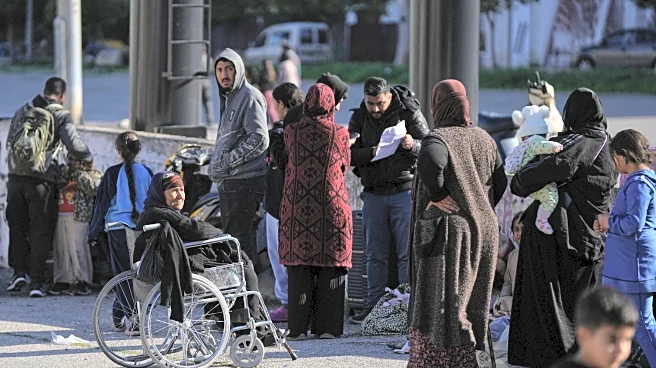
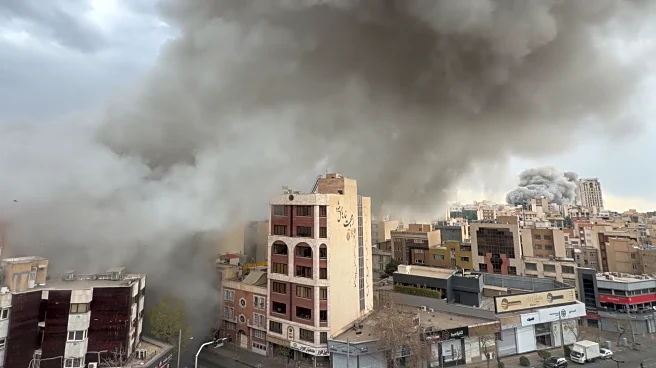
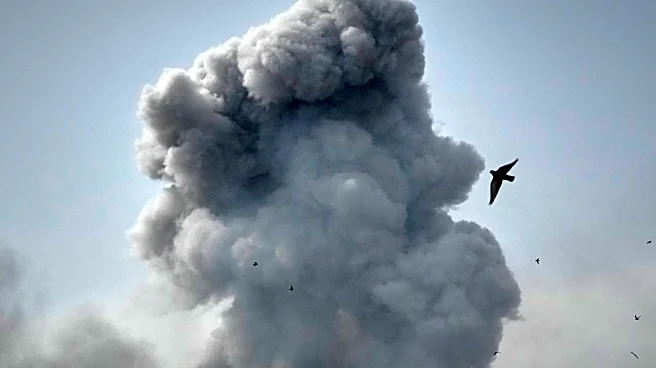
In a significant escalation of conflict, Israeli airstrikes have targeted Hezbollah positions in Lebanon, leading to a humanitarian crisis as thousands of Lebanese civilians flee their homes. The strikes, which began after Hezbollah launched missile and drone
attacks on northern Israel, have resulted in over 50 deaths and numerous injuries, according to Lebanon's Health Ministry. The Lebanese government has condemned Hezbollah's actions, calling them illegal and demanding the group disarm. The conflict has caused widespread displacement, with many seeking refuge in Beirut's capital. The situation has prompted the closure of schools and the opening of temporary shelters to accommodate the displaced population.
Why It's Important?
The escalation between Israel and Hezbollah has significant implications for regional stability and international relations. The conflict threatens to further destabilize Lebanon, a country already grappling with economic and political challenges. The Lebanese government's criticism of Hezbollah marks a notable shift in internal politics, potentially affecting the group's influence within the country. The situation also poses a risk of broader regional conflict, involving other nations and impacting global energy markets, as seen by the rise in oil prices. The humanitarian crisis adds pressure on international organizations to provide aid and support to the displaced populations.
What's Next?
The Lebanese government has called for international intervention to halt Israeli strikes and prevent further escalation. The Israeli military has warned of potential ground invasions, keeping all options open. The international community, including the United Nations, may need to mediate to prevent a full-scale war. The situation requires urgent diplomatic efforts to de-escalate tensions and address the humanitarian needs of the displaced. The Lebanese government's stance against Hezbollah could lead to internal political shifts, affecting future governance and security policies.
Beyond the Headlines
The conflict highlights the complex interplay of regional politics, with Hezbollah's actions linked to broader geopolitical tensions involving Iran and Israel. The Lebanese government's response may signal a shift towards greater state control over military actions, challenging Hezbollah's dual role as a political and military entity. The crisis underscores the fragility of Lebanon's political landscape and the need for comprehensive reforms to address underlying issues. The international community's response will be crucial in shaping the future of Lebanon and the broader Middle East region.