



What's Happening?
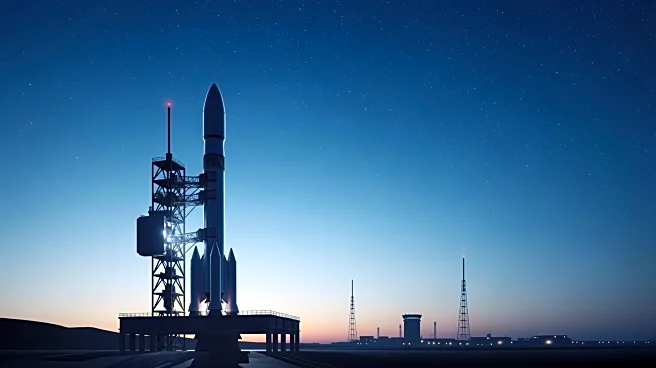
NASA is set to provide live coverage of the launch and docking of the Roscosmos Progress 94 spacecraft, which is scheduled to take off from the Baikonur Cosmodrome in Kazakhstan. The launch is planned for 7:59 a.m. EDT on March 22, 2026, and will be broadcast
on NASA+, Amazon Prime, and YouTube. The spacecraft will carry approximately three tons of food, fuel, and supplies to the International Space Station (ISS). After a two-day journey, it will dock autonomously at the Poisk module on March 24. This mission follows the recent departure of Progress 92, which undocked from the ISS and re-entered Earth's atmosphere on March 16. The Progress 94 spacecraft will remain attached to the ISS for about six months before it is scheduled to re-enter the atmosphere for disposal.
Why It's Important?
The Progress 94 mission is crucial for maintaining the continuous operation of the International Space Station, which has been inhabited for over 25 years. The supplies delivered by the spacecraft are essential for the crew's sustenance and the station's operations. This mission also supports NASA's broader goals of advancing scientific research and preparing for future long-duration missions to the Moon and Mars. The ISS serves as a platform for scientific experiments that cannot be conducted on Earth, contributing to our understanding of space and human spaceflight. The successful execution of such missions is vital for sustaining international collaboration in space exploration.
What's Next?
Following the docking of Progress 94, the spacecraft will remain at the ISS for approximately six months. During this time, it will be used to store and eventually dispose of waste from the station. The mission's success will pave the way for future resupply missions, which are critical for the ongoing operation of the ISS. Additionally, the data and experience gained from these missions will inform NASA's plans for the Artemis program and potential manned missions to Mars. Stakeholders, including international space agencies and commercial partners, will continue to monitor and support these efforts.