
What's Happening?
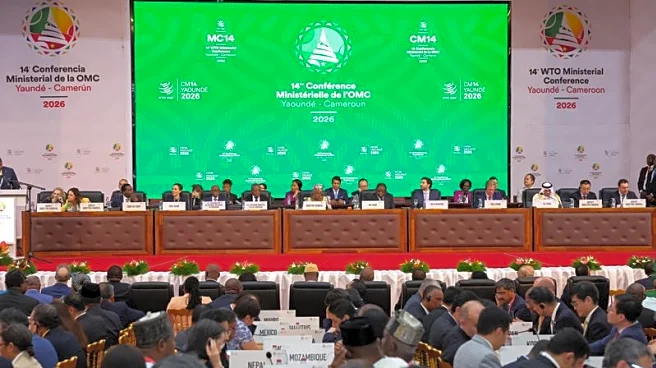
Trade ministers from around the world convened in Yaounde for a high-level World Trade Organization (WTO) meeting to address critical issues in agriculture and fisheries. The conference, however, is marked by limited progress due to deep-seated divisions
among member countries. The WTO, weakened by geopolitical tensions and stalled negotiations, is under pressure to reform. Discussions are centered on agriculture, where trade barriers have significantly decreased over the years, and fisheries, where harmful subsidies remain a contentious issue. Despite the urgency, no major agreements are anticipated, though there is a push for a declaration on agriculture, trade, and global food security to guide future negotiations. The meeting also revisits the 2022 agreement to ban harmful fisheries subsidies, with ongoing debates about expanding the ban to include subsidies that contribute to overfishing.
Why It's Important?
The outcomes of the WTO conference have significant implications for global trade, particularly for developing countries that rely heavily on agriculture. The inability to reach consensus on agricultural reforms could perpetuate trade imbalances, affecting food security and economic stability in these regions. The discussions on fisheries subsidies are crucial for sustainable fishing practices, impacting marine ecosystems and the livelihoods of millions dependent on fishing. The conference's failure to achieve substantial progress highlights the challenges of multilateral trade negotiations in a polarized global environment. The decisions made, or lack thereof, could influence future trade policies and the WTO's role in facilitating global trade.
What's Next?
The WTO aims to reach an agreement on agriculture by the next ministerial meeting in two years. Meanwhile, countries will continue negotiations on fisheries subsidies, with the current agreement set to expire in 2029 if no further deal is reached. The ongoing discussions will likely see continued lobbying from countries like India and Indonesia, which have expressed concerns over proposed rules. The United States and other nations advocating for stricter regulations will also play a pivotal role in shaping the negotiations. The outcomes will depend on the ability of member countries to bridge their differences and commit to sustainable trade practices.