






What's Happening?
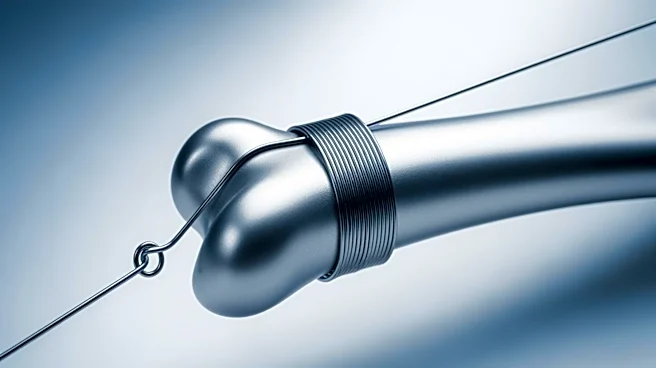
A recent study has highlighted the effectiveness of loop anchor tension band wiring (TBW) in reducing Kirschner wire migration in olecranon fractures. The research compared traditional TBW methods with the loop anchor technique, finding that the latter
significantly decreases the rate of posterior wire migration and subsequent irritation. The study involved patients treated with both methods, showing that those in the loop anchor group experienced fewer complications related to wire migration and irritation. The loop anchor technique involves inserting K-wires into the anterior ulnar cortex, bending them, and reinserting them to achieve tricortical fixation, which enhances pullout strength and stability. This method has shown to be particularly beneficial in comminuted fractures, where wire migration is more common. The study also noted that the loop anchor technique is cost-effective and easy to replicate, making it a viable option for treating olecranon fractures.
Why It's Important?
The findings of this study are significant for orthopedic surgery, particularly in the treatment of olecranon fractures. The reduction in wire migration and irritation can lead to fewer reoperations and improved patient outcomes. This is crucial as high reoperation rates due to hardware complications are a common issue in traditional TBW methods. By minimizing these complications, the loop anchor technique can reduce healthcare costs and improve the quality of life for patients. Additionally, the ease of replication and cost-effectiveness of the loop anchor method make it accessible for a wide range of healthcare settings, potentially standardizing treatment protocols for olecranon fractures.
What's Next?
Further research is needed to validate these findings across larger and more diverse patient populations. Future studies could focus on optimizing the loop anchor technique, exploring different wire configurations, and assessing long-term outcomes. Additionally, the development of standardized guidelines for the use of loop anchor TBW in various fracture patterns could enhance its adoption in clinical practice. As the technique gains traction, it may influence training programs for orthopedic surgeons, emphasizing the importance of minimizing hardware-related complications in fracture management.
Beyond the Headlines
The study's implications extend beyond immediate clinical outcomes, potentially influencing the broader field of orthopedic surgery. The loop anchor technique's success may encourage innovation in other areas of fracture treatment, promoting the development of new methods that prioritize patient comfort and reduce the need for secondary surgeries. This shift could lead to a reevaluation of current practices and inspire further research into minimally invasive and patient-centered approaches in orthopedic care.