
What's Happening?
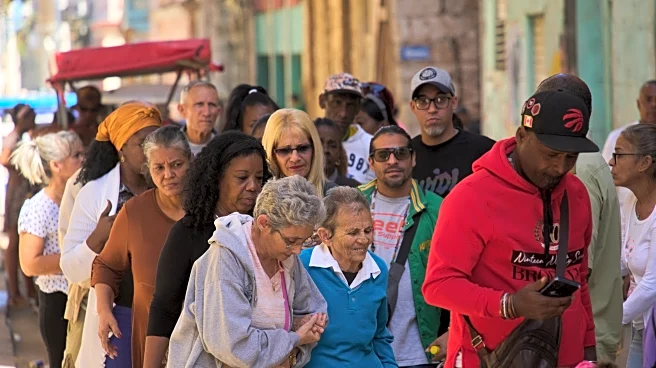
Russia is preparing to send oil shipments to Cuba, defying President Trump's warnings that countries supporting the Cuban regime could face U.S. tariffs. This move comes as Cuba faces a severe energy crisis, with dangerously low fuel reserves leading
to widespread blackouts and public unrest. Moscow's embassy in Havana has confirmed the shipment but has not disclosed the volume. The situation is exacerbated by the U.S. stopping Venezuela from exporting oil to Cuba and Mexico freezing its shipments following Trump's tariff threats. Analysts warn that Cuba could run out of fuel within 20 days without new imports.
Why It's Important?
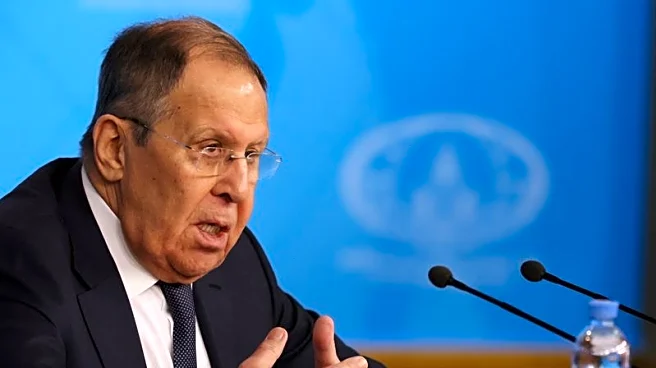
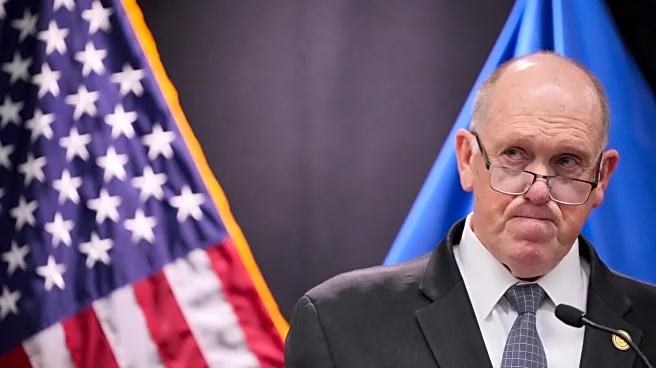
The shipment from Russia represents a significant geopolitical challenge to U.S. foreign policy under President Trump, who is intensifying economic pressure on adversarial governments. By providing oil to Cuba, Russia is not only supporting a long-time ally but also expanding its influence in the Western Hemisphere, potentially escalating tensions between Washington and Moscow. The U.S. aims to hold the Cuban regime accountable for human rights abuses and economic repression, and this development could undermine those efforts. The energy crisis in Cuba highlights the broader impact of U.S. sanctions and the geopolitical maneuvering of major powers.
What's Next?
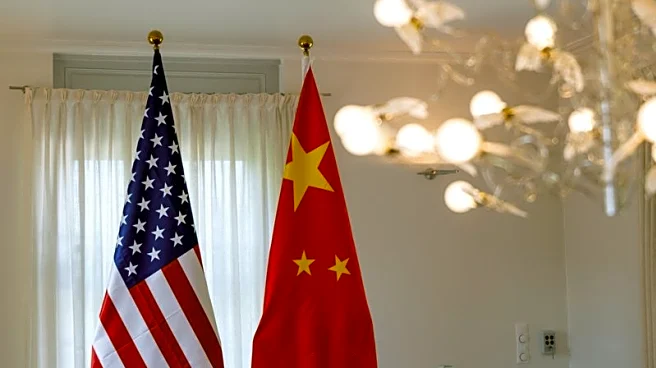
The oil shipment could lead to increased diplomatic tensions between the U.S. and Russia, with potential enforcement actions against Russian tankers. The U.S. may respond with further sanctions or trade measures to counter Russia's influence in Cuba. Meanwhile, Cuba will need to manage its energy crisis and public unrest, possibly seeking additional international support. The situation could prompt further geopolitical shifts in the region, as countries navigate the complex dynamics of U.S. sanctions and Russian aid.
Beyond the Headlines
Russia's framing of the oil shipment as 'humanitarian aid' is seen by critics as propaganda, aimed at maintaining its influence in Cuba while challenging U.S. policies. This strategic move reflects the ongoing Cold War-era dynamics and the Kremlin's efforts to assert its presence in America's backyard. The situation raises ethical questions about the use of humanitarian aid as a political tool and the broader implications for international relations and regional stability.