





What's Happening?
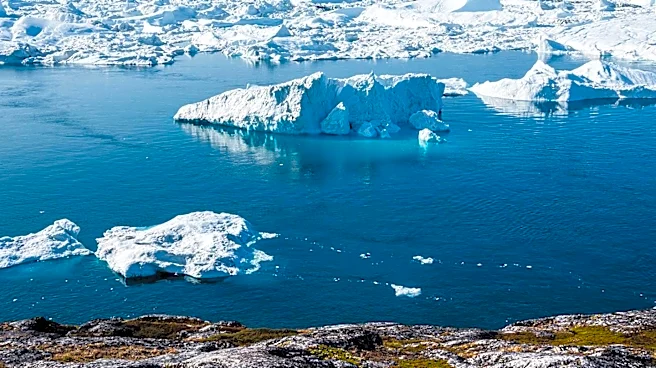
Thawing Arctic permafrost is increasingly contributing to global warming by releasing greenhouse gases, including carbon dioxide and methane, previously stored in frozen soils. This process occurs as microorganisms break down organic material preserved
for millennia. While a recent scientific review indicates the Arctic region still functions as a modest carbon sink due to the Arctic Ocean's absorption of carbon dioxide, the carbon balance on land, particularly in permafrost areas, is undergoing significant changes. New research highlights that additional emissions from permafrost, wetlands, lakes, and wildfires could lead to an approximate 0.2 to 0.4 degrees Celsius increase in global warming by 2100, with methane accounting for about half of this effect. Visible manifestations of this phenomenon include methane bubbles rising from Alaskan lakes where organic material has been trapped in permafrost.
Why It's Important?
The release of greenhouse gases from thawing permafrost represents a critical feedback loop in climate change, accelerating global warming. This phenomenon has significant implications for U.S. climate policy and environmental strategies, as the Arctic's changing carbon balance directly impacts global climate models and future warming projections. The potential for an additional 0.2 to 0.4 degrees Celsius warming by 2100, partly driven by methane, underscores the urgency for more comprehensive climate action. The U.S., as a major global economy, stands to be affected by the broader environmental and economic consequences of accelerated warming, including extreme weather events, sea-level rise, and disruptions to ecosystems. Understanding and mitigating these emissions are crucial for protecting coastal communities, agricultural sectors, and national infrastructure from climate-related damages.
What's Next?
The ongoing changes in Arctic permafrost necessitate a reevaluation of current climate projections and mitigation strategies. Policymakers and scientists will likely focus on improving the accuracy of climate models to better incorporate these natural feedback loops, which have historically been underestimated. This could lead to increased investment in Arctic research, monitoring systems, and international collaborations to understand the full scope of permafrost thaw and its emissions. Furthermore, the findings may prompt discussions on more aggressive greenhouse gas reduction targets and the development of technologies to capture or neutralize these emissions. The U.S. government and environmental organizations may also explore strategies to protect vulnerable Arctic ecosystems and indigenous communities disproportionately affected by these environmental shifts.
Beyond the Headlines
The thawing of Arctic permafrost raises profound ethical and long-term implications. The release of ancient carbon, stored for millennia, signifies a rapid and irreversible alteration of Earth's natural carbon cycle, potentially pushing the planet past critical climate thresholds. This development highlights the interconnectedness of global ecosystems and the far-reaching consequences of human-induced climate change. It also underscores the concept of 'tipping points' in the climate system, where gradual changes can lead to abrupt and significant shifts. The ethical dimension involves the responsibility of current generations to address these long-term environmental liabilities, which will impact future generations globally. Legally, it could spur international debates on climate accountability and the equitable distribution of mitigation burdens, especially as the U.S. and other nations grapple with the escalating costs of climate adaptation.