







What's Happening?
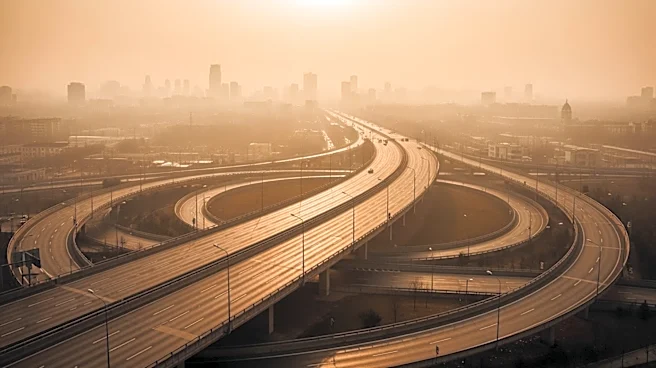
The National Weather Service has issued an air quality alert for several regions in Texas, including Dallas-Fort Worth, Houston, Galveston, and Brazoria, due to expected elevated levels of ozone. Residents are advised to limit vehicle use on Memorial
Day to help reduce ozone pollution. The alert encourages carpooling, walking, biking, and other measures to decrease emissions. Ozone Action Days have been declared, indicating that ozone levels may reach or exceed the Environmental Protection Agency's (EPA) Air Quality Index Level Orange threshold. This threshold is defined as an eight-hour average of 71 parts per billion or a one-hour average of 125 ppb. The Texas Commission on Environmental Quality (TCEQ) uses historical weather patterns, ozone monitoring data, and predictive models to issue these alerts, coordinating with the National Weather Service for dissemination.
Why It's Important?
The air quality alert is significant as it highlights the ongoing environmental challenges faced by urban areas in Texas, particularly during warmer months when ozone formation is more likely. Elevated ozone levels pose health risks, especially to vulnerable groups such as people with asthma, children, older adults, and outdoor workers. Exposure to high ozone levels can lead to respiratory issues, exacerbate existing lung conditions, and increase the frequency of asthma attacks. The alert underscores the need for public awareness and action to mitigate air pollution, which has broader implications for public health and environmental policy in the region.
What's Next?
Residents and local authorities are expected to take measures to reduce emissions and improve air quality. This may include increased public transportation options, stricter vehicle emissions standards, and public campaigns to raise awareness about the health impacts of ozone pollution. The TCEQ and other environmental agencies will continue to monitor air quality and issue alerts as necessary. Long-term strategies may involve policy changes to address the root causes of air pollution, such as industrial emissions and urban planning.