








What's Happening?
Indonesia has reassured the international shipping community that it will not impose tolls on ships passing through the Strait of Malacca. This announcement comes after Indonesia's finance minister, Purbaya Yudhi Sadewa, suggested the idea of charging
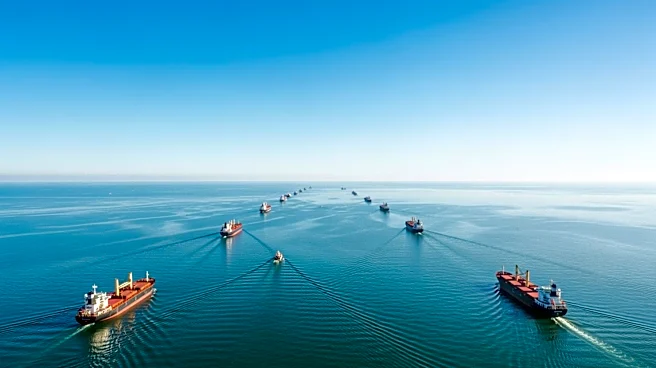
tolls at a symposium in Jakarta. The Strait of Malacca is a critical maritime passage, with an estimated 22% of the world's maritime trade passing through it. Indonesian Foreign Minister Sugiono emphasized that Indonesia supports freedom of navigation and is committed to keeping sea lanes open. The proposal was compared to Iran's toll system in the Strait of Hormuz, where ships are charged significant fees. However, Sugiono clarified that Indonesia, as an archipelagic state, must respect the United Nations Convention on the Law of the Sea (UNCLOS), which prohibits such tolls. Following Sugiono's comments, Sadewa retracted his suggestion, affirming Indonesia's commitment to UNCLOS.
Why It's Important?
The decision to keep the Strait of Malacca toll-free is significant for global trade, as it is a major shipping route connecting Asia to Europe and other regions. Imposing tolls could have increased shipping costs, affecting global supply chains and trade dynamics. The strait's free passage is crucial for countries like Singapore and Malaysia, which rely heavily on maritime trade. Maintaining open sea lanes aligns with international maritime laws and supports the economic interests of the region. The move also prevents potential diplomatic tensions with neighboring countries and major trading partners who depend on the strait for their shipping needs.